1. Filtration Challenges of Seawater Raw Water for Desalination
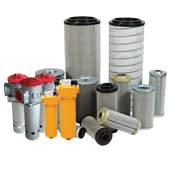
The raw water taken from the ocean contains a complex mixture of contaminants including sand, silt, plankton, algae, barnacle larvae and floating debris. The high flow filter cartridge and supporting water filter housing undertake fine polishing protection for RO membranes, while the upstream self-cleaning filter bears the heavy task of bulk impurity removal. Unlike fresh water or circulating water, seawater features high chloride ion concentration, strong corrosivity, and fluctuating impurity load affected by tides, storms and seasons. Sudden surges of sediment after heavy weather will quickly clog ordinary strainers and disposable filter elements. If large particles and marine organisms are not intercepted in advance, they will scratch the membrane surface, accelerate biological fouling, increase chemical cleaning frequency and bring huge economic losses to the desalination plant. Traditional basket strainers require frequent shutdown and manual cleaning, which cannot match the 24-hour continuous operation requirement of large-scale seawater desalination lines.

2. Working Principle of Self-cleaning Filter for Seawater Pretreatment
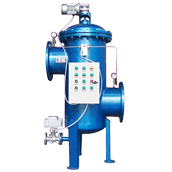
The self-cleaning filter adopts an in-out or out-in flow structure with a cylindrical filter screen inside. Raw seawater flows into the filter chamber, and solid pollutants are trapped on the surface of the screen. The filtered water flows out towards the downstream pipeline, heading for dosing tanks, ultrafiltration or cartridge filter units.
The system is controlled by differential pressure and timer dual triggers. When the pressure difference between the inlet and outlet reaches the preset value, or the cleaning countdown ends, the automatic cleaning cycle activates. The internal brush or suction scanner moves along the screen surface to strip off accumulated dirt, and the blowdown valve opens to discharge the sewage out of the system. The whole cleaning process runs online without interrupting the main seawater flow, which is the core advantage for continuous desalination production.
For seawater conditions, the filter screen is usually made of 316L stainless steel or duplex stainless steel to resist chloride corrosion. Common filtration precision for this stage ranges from 50 μm to 300 μm.
3. Key Technical Requirements for Seawater Desalination Self-cleaning Filters
3.1 Corrosion resistance adapted to high-salinity seawater
Ordinary carbon steel will suffer rapid pitting and rusting in seawater. LEFILTER’s seawater-special self-cleaning filter uses duplex stainless steel for key wetted parts in most coastal projects, while 316L stainless steel is an alternative for relatively mild working conditions. The shaft seal, fasteners and drain valve are also selected with marine-grade anti-corrosion materials to avoid medium leakage and component failure after long-term immersion.
3.2 Anti-adhesion design for marine organisms
Algae and biofilm easily attach to the filter screen in seawater. The brush/scraper structure is optimized to remove sticky biological slime effectively. Combined with periodic online cleaning, it reduces the probability of biological colonization on the screen surface, which is a pain point that many imported filters ignore in actual coastal applications.
3.3 Stable operation under tidal flow fluctuation
The intake flow and impurity content of seawater change with tides. The control system supports wide-range flow adaptation. The large dirt holding capacity of the screen prevents frequent triggering of cleaning cycles during peak sediment periods.
3.4 Simple integration with the whole pretreatment process
The self-cleaning filter is installed after the seawater intake pump and before the chemical dosing system or fine filter bank. It can be equipped with pressure transmitters, flow meters and remote signal output, so the operating status can be uploaded to the plant DCS system for centralized monitoring.

4. LEFILTER Complete Pretreatment Filtration Configuration Scheme
A mature seawater desalination pretreatment filtration chain follows a staged logic:
Primary interception: Coarse bar screen at the seawater intake point to intercept large floating debris such as branches and plastic waste.
Main coarse filtration: LEFILTER self-cleaning filter, removing sand, shell fragments and macro marine organisms. This greatly reduces the contaminant load entering the downstream fine filtration section.
Polishing protection: Water filter housing equipped with high flow filter cartridge or ultrafiltration membrane, serving as the final safety barrier for RO membranes.
This two-stage filtration combination effectively balances treatment capacity, operating cost and protection performance. The self-cleaning filter takes most of the impurity load, so the service cycle of downstream high flow filter cartridge can be extended significantly, cutting consumable replacement frequency and labor cost.
For small and medium-sized desalination skids, we also provide compact integrated self-cleaning filter assemblies with pre-piped valves and instrument ports, which are convenient for containerized desalination projects.
5. Benefits of Deploying Self-cleaning Filter in Desalination Raw Water
No production shutdown during cleaning:
Suitable for desalination plants that require uninterrupted water supply.
Lower long-term OPEX:
Reduce the consumption of fine filter cartridges and the frequency of RO chemical cleaning.
Strong adaptability to harsh coastal conditions:
Anti-corrosion material configuration reduces the risk of equipment failure caused by seawater corrosion.
Less manual intervention:
Automatic differential pressure control lowers the workload of on-site operators.
Compatible with containerized and large fixed desalination projects:
Customized size and flow range can match different plant scales.
Many desalination clients have replaced old basket strainers or imported automatic filters with LEFILTER self-cleaning units, and achieved stable operation after commissioning, with obvious reduction in membrane fouling rate.
6. Conclusion
Raw water pretreatment is the foundation of profitable seawater desalination. Self-cleaning filters have become the preferred coarse filtration equipment for desalination intake lines, solving the defects of traditional manual filters that require shutdown cleaning. When matched with water filter housing and high flow filter cartridge for subsequent fine filtration, the whole system can form a reliable protection loop for reverse osmosis membranes. As the global demand for desalination capacity grows, anti-corrosion, low-maintenance automatic filtration equipment will keep playing an irreplaceable role in coastal water supply projects. LEFILTER continues to optimize seawater-grade self-cleaning filter structure and material options, providing EPC contractors and desalination plant owners with full-condition filtration solutions.
FAQ
Q1: What filtration precision is usually selected for self-cleaning filters in seawater desalination intake?
A: 100 μm ~ 200 μm is the most common specification. For sites with heavy sediment, 300 μm can be adopted, and finer polishing is finished by downstream cartridge filters.
Q2: Is duplex stainless steel mandatory for seawater self-cleaning filters?
A: It depends on water temperature and salinity. 316L can work for low-temperature seawater, while duplex stainless steel is recommended for warm seawater and long-term continuous operation to avoid chloride pitting corrosion.
Q3: Can self-cleaning filter completely replace cartridge filters for RO protection?
A: No. The self-cleaning filter is coarse filtration. It cannot capture fine colloids and tiny particles, so a secondary polishing filter with high flow filter cartridge is still required before RO.
Q4: What is the difference between brush type and suction scan type self-cleaning filter for seawater?
A: Brush type is better for hard sediment and shell particles; suction scan type consumes less blowdown water and performs better for fine silt. LEFILTER can recommend the right type according to raw water test report.
Q5: Can LEFILTER supply self-cleaning filters for containerized seawater desalination skids?
A: Yes. We can design compact, space-saving versions with DCS signal interface, matching modular and container desalination systems.
Recommended Related Articles
Difference Between High Negative Pressure Dust Collector and Standard Dust Collector
Application of Automated Dry Ice Blasting Technology in Lithium‑Ion Battery Manufacturing
Application of Self-Cleaning Filters in Aluminum Die-Casting Circulating Cooling Water
Middle and Senior Management Training: "The Wisdom of a Team - Heart Method" in Zhengzhou
Suspended particulate matter removal shallow sand filter