1. Filtration Status and Difficulties of Salt Lake Brine for Lithium Extraction
The whole brine-to-lithium production line covers raw brine collection, pre-concentration, adsorption, membrane separation, purification and lithium precipitation. The high flow filter cartridge and supporting water filter housing serve as core fine polishing units after crude pre-treatment, guarding membrane modules, adsorbent resins and crystallization systems against particulate fouling. Unlike fresh water or circulating water, salt lake brine contains massive calcium, magnesium, sulfate, suspended sediment, algae and silicate colloid. These contaminants easily form hard scale on filter media and membrane surfaces. Improper filtration configuration will cause rapid pressure rise, frequent element replacement, membrane damage, low lithium yield and off-spec lithium carbonate products. In addition, brine has strong corrosivity, so filter materials must resist chloride ion corrosion to avoid metal ion contamination of lithium solution.

2. Filtration Requirements for Each Stage in Brine Extraction of Lithium
2.1 Raw brine intake & pre-concentration stage
Raw brine pumped from salt ponds carries sand, sludge, plankton and large flocs. The core goal here is bulk solids removal to protect subsequent pumps, pipelines and heat exchangers.
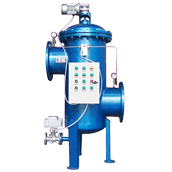
Common equipment: self-cleaning filters, basket strainers.
Typical filtration rating: 50–200 μm.
Key requirements: anti-abrasion structure, automatic backwashing, large dirt holding capacity, stable operation under fluctuating brine flow. Fine filtration is not needed at this stage; over-precision filtration will lead to extremely frequent cleaning.
2.2 Adsorption / ion exchange resin protection stage
After pre-concentration, brine enters the resin adsorption tower to capture lithium ions. Fine suspended particles and colloids will block resin pores, reduce adsorption capacity and shorten resin service life greatly.
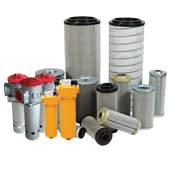
Common equipment: multi-cartridge filter housing, high flow filter cartridge.
Typical filtration rating: 5–20 μm.
Key requirements: low differential pressure, uniform flow distribution inside the water filter housing, resin fragment interception function, salt-resistant filter media. Many imported filters show fast blinding in high-salinity brine, raising consumable costs obviously.
2.3 Membrane separation & nanofiltration / RO protection stage
Membrane process is widely used for magnesium-lithium separation and brine concentration. Membrane elements are very sensitive to fine particles and colloids. Once fouling occurs, cleaning efficiency is limited and membrane replacement cost is high.
Common equipment: sanitary multi-round filter housing, pleated high flow filter cartridge.
Typical filtration rating: 1–5 μm.
Key requirements: absolute retention rating, no fiber shedding, 316L or duplex stainless steel housing, pressure difference online monitoring. This is one of the most critical polishing links in the whole process.
2.4 Lithium carbonate purification & precipitation mother liquid stage
After lithium enrichment, the liquid enters precipitation, washing and recrystallization to produce lithium carbonate. Impurities such as calcium, magnesium hydroxide precipitate and fine crystal particles need to be filtered to guarantee product purity.
Common equipment: high flow filter cartridge housing, bag filter housing.
Typical filtration rating: 0.45–5 μm, adjusted according to purity standard of battery-grade lithium carbonate.
Key requirements: low metal extraction, easy CIP cleaning, batch switching without cross-contamination. For battery-grade lithium products, filter material certification for low heavy metal leaching is mandatory.
2.5 Waste mother liquid and brine recycling stage
A large amount of mother liquid is generated after lithium precipitation and returned to the system for recycling. Fine crystals and precipitates in the return liquid will accumulate in the loop.
Common equipment: automatic backwash filters + safety cartridge filters.
Typical filtration rating: 10–50 μm.
Key requirements: continuous online operation, less downtime, strong anti-scaling performance.
3. Key Selection Principles of Filtration Products for Salt Lake Brine
3.1 Material compatibility against high chloride salinity
Ordinary 304 stainless steel is prone to pitting corrosion in long-term contact with concentrated brine. 316L stainless steel is widely adopted for water filter housing, while duplex stainless steel is recommended for extra high salinity working conditions. Filter media should choose PP, PES or PTFE, avoiding cellulose media which degrades easily in brine.
3.2 High dirt-holding capacity to reduce replacement frequency
Salt lake projects usually run 24/7 continuously. Traditional small folded cartridges have limited contaminant loading. High flow filter cartridge is preferred because one single element can bear much larger flow, decreasing the total quantity of cartridges and cutting maintenance workload in remote salt lake sites.
3.3 Differential pressure control and automatic alarm
Brine scaling is progressive. Operators cannot judge fouling status visually. Each filter housing should be equipped with differential pressure transmitters and alarm output, to arrange maintenance before severe blockage occurs.
3.4 On-site adaptability for remote salt lake areas
Most salt lake bases are located in remote regions with limited service support. The filtration system should have simple structure, quick-opening housing design and standardized spare parts, so local workers can finish cartridge replacement and routine maintenance easily.

4. LEFILTER Integrated Filtration Solutions for Salt Lake Lithium Extraction
Based on the staged filtration logic above, LEFILTER supplies matched combinations for different process sections.
For coarse pretreatment: automatic self-cleaning filters customized with anti-scaling brush structure.
For resin and membrane protection: 316L stainless steel water filter housing paired with salt-resistant high flow filter cartridge. The gradient pleated structure improves contaminant holding capacity and resists rapid blinding compared with many imported equivalents.
For battery-grade lithium carbonate polishing: PTFE or high-purity PES high flow cartridges with low metal release, supporting CIP cleaning cycles.
We provide full service including working condition calculation, flow simulation, sample testing, on-site trial run and after-sales technical guidance. Our engineering team adjusts filtration grade, housing layout and media type according to local brine salinity, suspended solid content and target lithium product grade.
5. Conclusion
There is no universal filtration specification suitable for the whole salt lake lithium extraction line. Each process segment has separate removal targets, precision standards and corrosion risks. A rational staged filtration system combining coarse pre-filtration and fine polishing with high flow filter cartridge and water filter housing can protect core assets (resin, membrane, crystallizer), stabilize lithium carbonate quality and lower the overall operation cost. As the demand for battery-grade lithium carbonate rises, more lithium enterprises are upgrading their filtration units and seeking stable domestic alternatives to imported filtration brands. LEFILTER keeps optimizing brine-specialized filter media and housing structure to fit the harsh working conditions of salt lake projects.
FAQ
Q1: What filter rating is mostly used for membrane protection in salt lake lithium projects?
A: 5 μm absolute rating is the mainstream choice for NF/RO pre-filtration; some high-purity requirements adopt 1–3 μm.
Q2: Can PP high flow filter cartridges be used for lithium carbonate polishing?
A: PP is suitable for general industrial-grade lithium carbonate. For battery-grade products, PES or PTFE media is preferred for better chemical stability and lower impurity dissolution.
Q3: Why duplex stainless steel housing for some salt lake brine?
A: When chloride ion concentration is extremely high, 316L may still suffer corrosion. Duplex stainless steel offers stronger resistance to chloride pitting and crevice corrosion.
Q4: Is it necessary to install self-cleaning filter before cartridge filter housing?
A: It is strongly recommended. The upstream self-cleaning filter removes large sediment, greatly extending the service life of downstream high flow filter cartridges and reducing consumable expenditure.
Q5: Does LEFILTER support brine sample testing before formal order?
A: Yes. We accept brine sample testing to verify media fouling rate and recommend the optimal filtration solution before mass supply.
Recommended Related Articles
Difference Between High Negative Pressure Dust Collector and Standard Dust Collector
Application of Automated Dry Ice Blasting Technology in Lithium‑Ion Battery Manufacturing
Application of Self-Cleaning Filters in Aluminum Die-Casting Circulating Cooling Water
Middle and Senior Management Training: "The Wisdom of a Team - Heart Method" in Zhengzhou
Suspended particulate matter removal shallow sand filter