Product Introduction
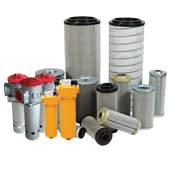
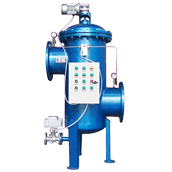
LEFILTER provides a complete set of fluid purification equipment including high flow filter cartridge, water filter housing and self-cleaning filter, and the carbon filter cartridge is an important polishing component in our product matrix for organic adsorption and decolorization. Many well-known imported brands such as Pall and 3M supply standard activated carbon filter elements, yet their standard products often show insufficient adsorption capacity, carbon powder shedding and poor acid and alkali resistance when facing high-salt brine, high-chloride chemical feed liquid and complex organic mixtures. LEFILTER carbon filter cartridges adopt high-quality coal-based or coconut shell activated carbon, with optimized carbon loading and fixed structure, and can be installed into standard water filter housing seamlessly. Combined with front-end self-cleaning filter and pre-filtration high flow filter cartridge, it builds a multi-stage purification system to remove TOC, humic acid and pigment steadily for brine and chemical liquid projects.
1. Working Principle of Carbon Filter Cartridge
Different from surface interception filter cartridges that only trap solid particles, carbon filter cartridges rely on the porous adsorption structure of activated carbon. Massive micro-pores on the carbon surface capture dissolved organic molecules, aromatic compounds, humus and chromogenic substances that cannot be removed by ordinary precision filtration.
Two main adsorption mechanisms coexist in the working process: physical adsorption based on van der Waals force and chemical adsorption formed by surface functional groups of activated carbon. Physical adsorption is reversible and will reach saturation with the extension of running time; chemical adsorption can target specific organic groups and improve the removal efficiency of refractory organics.
It is worth noting that carbon filter cartridges cannot remove inorganic ions such as lithium, magnesium, calcium and sodium in brine. It is not a replacement for ion exchange resin or nanofiltration membrane. Its core positioning is organic matter and color removal after solid impurity filtration. Most overseas suppliers tend to overstate the function of carbon cartridges, which easily causes customers’ wrong expectation in project design.

2. Typical Application Scenarios for Brine & Chemical Liquid
2.1 Salt lake brine and DLE lithium extraction process
In salt lake brine, humic acid, fulvic acid and algae metabolites are the main organic pollutants. If they enter the DLE adsorbent bed, they will cause irreversible organic poisoning of the selective adsorbent, reduce lithium adsorption capacity and shorten the service life of adsorbent greatly. Carbon filter cartridge is usually arranged after pre-column precision filtration to reduce TOC load before the adsorption column.
2.2 Chemical feed liquid decolorization
In fine chemical, pharmaceutical intermediate and electrolyte production, the chroma of feed liquid often exceeds the standard due to by-products and residual raw materials. Activated carbon filter cartridge realizes continuous decolorization without large tank mixing, which is very suitable for skid-mounted continuous production lines.
2.3 Seawater desalination and RO pre-treatment
Natural organic matter in seawater is the main cause of RO membrane biofouling. Carbon filter cartridge is used together with self-cleaning filter and high flow precision cartridge filter to reduce the organic load of reverse osmosis system and extend the membrane cleaning cycle.
2.4 Recycling of industrial wastewater
For recycled water that needs to be reused, carbon filter cartridge removes residual trace organic substances and pigments, helping the water quality reach the reuse standard.
3. Graded Filtration Matching Scheme
Carbon filter cartridge is not suitable for direct treatment of raw liquid with high suspended solids. Solid particles will quickly cover the carbon surface pores and make the adsorption function fail in a short time. A scientific gradient configuration is required:
Front stage: self-cleaning filter, remove large suspended solids, sediment and oil droplets, reduce the solid load of the subsequent system;
Middle stage: high flow filter cartridge, 1–5 μm precision, intercept fine particles and colloids, prevent carbon pore blocking;
Polishing stage: carbon filter cartridge, adsorb dissolved organics and pigments, control TOC and chroma.
Many imported carbon cartridge projects have the problem of short service life. The root cause is that the front-end pre-filtration is omitted or the precision is not matched. The carbon layer is wrapped by silt and colloid quickly, and the adsorption capacity is not fully utilized.
4. Key Selection Parameters of Carbon Filter Cartridge
4.1 Activated carbon raw material
Coconut shell activated carbon: developed micropore structure, good effect on trace organic removal and decolorization, suitable for low to medium TOC brine and high-purity chemical liquid;
Coal-based activated carbon: large adsorption pore volume, strong pollution resistance, suitable for brine with high organic concentration and complex components.
4.2 Carbon fixation structure
The biggest common defect of low-quality carbon cartridges is carbon powder leakage. Free carbon powder will flow downstream, pollute adsorbent, resin and membrane modules. LEFILTER adopts hot melt wrapping and integral casting technology to lock carbon particles, effectively reduce carbon shedding, which is a prominent advantage compared with some loose-structured imported carbon cartridges.
4.3 Filter media support layer
The inner and outer supporting layers can be PP, PES or PVDF. PVDF supporting layer is selected for strong oxidizing and high-temperature brine to avoid substrate degradation.
4.4 Flow rate and service cycle
The recommended flow rate of carbon cartridge is lower than ordinary particle filter cartridge. Too fast flow will lead to insufficient contact time between fluid and carbon, and the organic removal rate drops obviously. The service cycle is judged by TOC outlet value, chroma and differential pressure, not a fixed replacement cycle.
5. Core Quality Control Indicators in Operation
TOC removal rate: according to the inlet organic content, the target is usually 30%–70%;
Chroma: reduce the chroma of feed liquid to the acceptable range of downstream process;
Effluent carbon powder content: no visible carbon particles, avoid secondary pollution;
Differential pressure rise: the differential pressure of new carbon cartridge is low; when the differential pressure rises rapidly, it mostly means the front pre-filtration fails;
pH and temperature adaptability: confirm the compatibility of carbon cartridge and supporting water filter housing under on-site fluid pH and temperature.
6. Common Problems & Troubleshooting
Problem 1: Decolorization effect fails quickly after short running time
Causes: insufficient pre-filtration, a large number of colloids and solids cover the carbon surface; the selected carbon type does not match the organic components in the liquid.
Solution: optimize the upstream self-cleaning filter and high flow cartridge pre-filter; test the feed liquid and replace the activated carbon type.
Problem 2: Black carbon powder appears in the outlet liquid
Causes: poor carbon fixation process, damaged cartridge during installation or excessive backwash impact.
Solution: adopt reinforced fixed carbon filter cartridges; control backwash pressure; check the sealing condition of water filter housing.
Problem 3: No obvious TOC reduction
Causes: the organic substances are macromolecular organics that are difficult to be adsorbed; the flow velocity is too high; the carbon cartridge has reached adsorption saturation.
Solution: adjust the flow rate; add oxidation pretreatment before carbon filtration; replace the saturated carbon cartridges in batches.
7. LEFILTER Carbon Filter Cartridge Solution Advantages
As a NEEQ-listed high-tech filtration manufacturer, LEFILTER can provide customized carbon filter cartridges according to customers’ brine sample test data, including carbon material selection, carbon filling amount, support layer material and end cap structure. Our carbon filter cartridges are fully compatible with standard water filter housing on the market, and can be used together with self-cleaning filter and high flow filter cartridge to form a complete organic removal and decolorization system.
Compared with imported brands, our carbon filter cartridges have stable adsorption performance, lower risk of carbon powder leakage, more competitive cost of consumables and shorter delivery time. We support sample testing before bulk order, so customers can verify the TOC removal and decolorization effect under real working conditions. Our technical team can guide the gradient filtration scheme design and daily operation parameter adjustment for lithium extraction, chemical and desalination projects.
FAQ
Q1: Can carbon filter cartridge remove lithium ions from brine?
A1: No. Carbon filter cartridge is only for dissolved organic matter and pigment adsorption. It cannot separate lithium, magnesium, calcium and other inorganic ions.
Q2: Is carbon filter cartridge reusable after saturation?
A2: Most disposable carbon filter cartridges for brine and chemical polishing are not regenerable. When adsorption saturation is reached, they need to be replaced. Large-scale activated carbon tank is the recyclable form.
Q3: What is the difference between carbon filter cartridge and ordinary pleated filter cartridge?
A3: Ordinary pleated high flow filter cartridge only intercepts solid particles and colloids by physical interception. Carbon filter cartridge adds adsorption function to remove dissolved organics and color.
Q4: Can carbon filter cartridge be installed directly after raw brine tank?
A4: Not recommended. Raw brine contains a lot of sediment and algae. The carbon pores will be blocked rapidly, and the service life will be extremely short. It must be equipped with front self-cleaning filter and precision pre-filter.
Q5: What is the main risk of carbon powder leakage?
A5: The carbon powder entering downstream will contaminate DLE adsorbent, ion exchange resin and RO membrane, resulting in irreversible performance loss and expensive replacement cost of downstream core equipment.
Recommended Related Articles
Difference Between High Negative Pressure Dust Collector and Standard Dust Collector
Application of Automated Dry Ice Blasting Technology in Lithium‑Ion Battery Manufacturing
Application of Self-Cleaning Filters in Aluminum Die-Casting Circulating Cooling Water
Middle and Senior Management Training: "The Wisdom of a Team - Heart Method" in Zhengzhou
Suspended particulate matter removal shallow sand filter