On November 14th, China's new energy vehicle production exceeded 10 million units per year for the
first time, which means that China's new energy vehicle industry has taken a new step forward.
So, how does the new energy vehicle industry treat wastewater?
How can sewage be 'reversed'?
Integrated intelligent equipment such as intelligent dosing, pretreatment, deep treatment, desliming, deodorization,
self-control, electrical control, and monitoring.
After pre-treatment of production wastewater, mixed wastewater treatment, miscellaneous water treatment,
and reclaimed water treatment system, the factory wastewater achieves "zero" heavy metal discharge, and the
proportion of recycled water can reach 50%, successfully achieving sewage treatment and comprehensive
utilization of water resources.
Industrial Wastewater Treatment & Reclaimed Water Reuse System - Process Description
1. Quality Classification & Pretreatment
Different types of wastewater (including silane waste liquid, electrophoretic fluid, paint-containing wastewater,
degreasing wastewater, demolding wastewater, etc.) are separately collected and pretreated through refined
pipelines and equipment.
2. Silane Waste Liquid Treatment
Chemical precipitation and coagulation-sedimentation processes are adopted for treatment.
3. Demolding Waste Liquid Treatment
Flocculants are dosed, and coagulation-sedimentation treatment is carried out in batch reaction tanks.
4. Degreasing Wastewater Treatment
Coagulation and dissolved air flotation (DAF) processes are employed to remove oil impurities and other
contaminants.
5. Coating Wastewater Treatment
Specific coagulation, sedimentation and anti-regulation treatments are applied to remove heavy metals and
other hazardous substances.
6. Mixed Sewage Treatment
All pretreated wastewater streams are combined with domestic sewage and fed into the mixed sewage
treatment system. Hydrolysis acidification and two-stage contact oxidation are conducted in a biochemical
combined tank, ensuring the effluent meets the reclaimed water discharge standard.
7. Reclaimed Water Reuse
The reclaimed water is treated by fiber ball filters, activated carbon filters, disc membrane filters and a two-stage
reverse osmosis (RO) system, then converted into purified water for reuse in production processes and air
conditioning systems.
8. Precision Dosing System
Chemicals (such as acids, alkalis, demulsifiers, coagulants, flocculants, etc.) are automatically and precisely dosed
based on the real-time water quality and volume of the wastewater.
9. Deodorization System
Advanced biological deodorization technology is adopted to effectively collect and treat odors generated during the
wastewater treatment process.
10. Monitoring System
Advanced monitoring equipment is equipped to conduct real-time monitoring of water quality and treatment efficiency,
ensuring the stability and high efficiency of the entire wastewater treatment process. Interfaces and space are reserved
for future renovation or expansion.
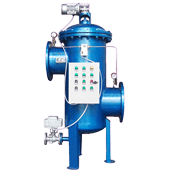
Stacked filter
Online filtering without interruption, fully automatic backwashing, high precision, small footprint, flexible
assembly.
Easy to clean, relatively simple to maintain, detachable for cleaning, and easy to maintain.
Filter a variety of impurities, including inorganic impurities (such as sand and sediment) and organic impurities
(such as seeds and floating debris).

Multi media filter
Adopting dual filter media reduces operating resistance, has a large filtration area, a large amount
of treated water, good operating effect, and low packing cost.
The filter material has the characteristics of corrosion resistance, high porosity, large pollutant
carrying capacity, moderate density, easy backwashing, strong interception ability, low water loss,
and good filtration effect.
Widely used in the pre filtration treatment of raw water for power generation, chemical industry,
papermaking, beverages, etc., for decolorization and removal of organic matter in chemical plant
feed water, pre-treatment of domestic water, and industrial water treatment.
Fiber ball filter
Has hydrophilic and oleophobic properties, stronger stain removal ability, and high backwash performance.
The filtration precision is higher, faster, and the interception capacity is larger.
Widely used in circulating water bypass filtration, deep treatment of domestic water, boiler feedwater treatment,
reverse osmosis pre filtration, and wastewater reuse filtration.
Automatic dosing device
According to the requirements of different process flows of users, targeted design and configuration of
necessary components can be carried out to achieve functional suitability (such as automatic remote control)
and economic practicality.
Suitable for thermal power generation or petrochemical cooling circulating water treatment, raw water
pretreatment, and wastewater neutralization treatment.
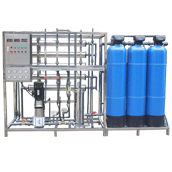
Reverse osmosis equipment
Reverse osmosis is a modern and novel technology for treating pure water. By using reverse osmosis
components to improve the purity of water and remove impurities and salts from the water.
The desalination rate of the first stage reverse osmosis system can be stable at over 90%, and the
desalination rate of the second stage reverse osmosis system can be stable at over 98%.
Reduced the cost of chemicals, labor, and wastewater treatment caused by resin regeneration, and
minimized environmental pollution.