High Flow Filter Cartridge for Automotive Paint Shop Process Water
Introduction:In an automotive paint shop the water is not there to wash anything; it is there to keep particles away from surfaces that will become visible paint. A phosphate crystal, a flake of mill scale from a body panel, a clot of coagulated overspray or a fibre shed by the wrong filter medium ends up either as a dirt defect that triggers a repair cycle or as a nozzle blockage that changes a spray pattern. Both outcomes cost far more than the filtration stage itself. This article covers a 6 in × 40 in single‑open‑end high flow cartridge for paint shop process water, including construction, capture behaviour in pre‑treatment and rinse streams, the fibre‑release question that is unique to this duty, typical specifications, advantages, application points, compatibility notes, selection criteria and the housekeeping rules that keep a paint shop clean.
We're here to help:
Easy ways to get the answers you need.
Product parameter:
Product Introduction
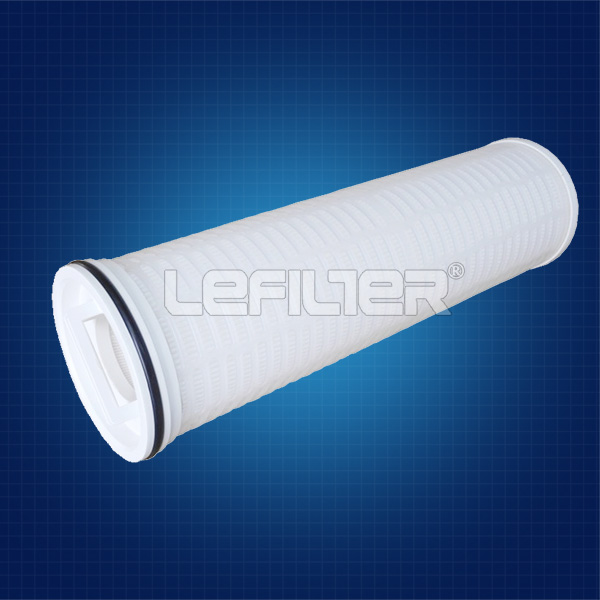
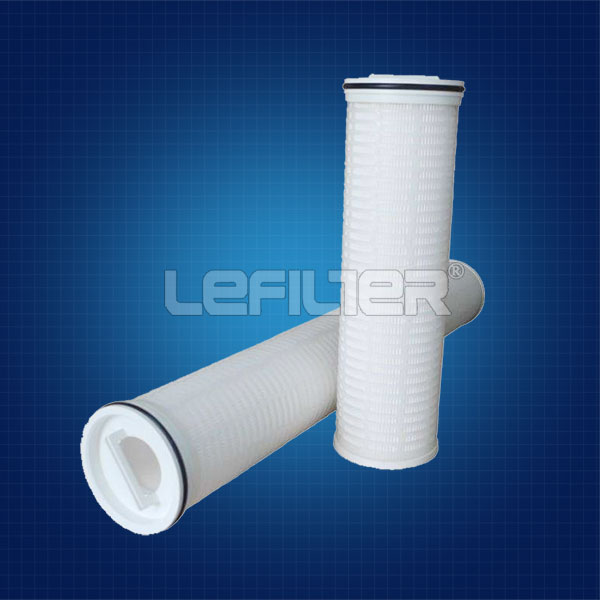
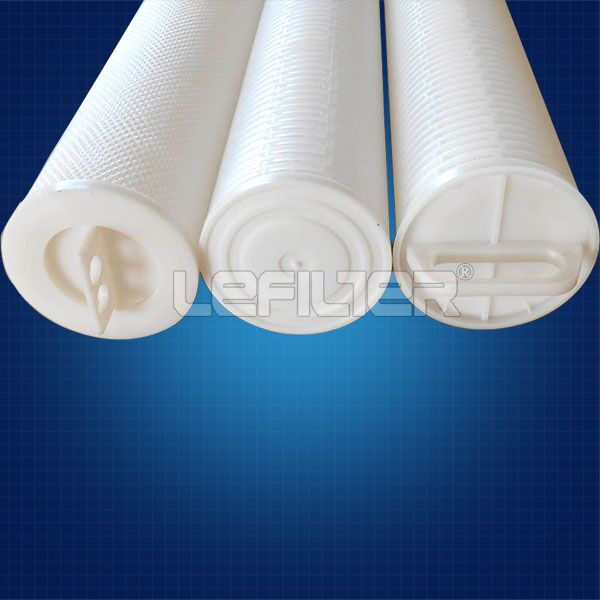
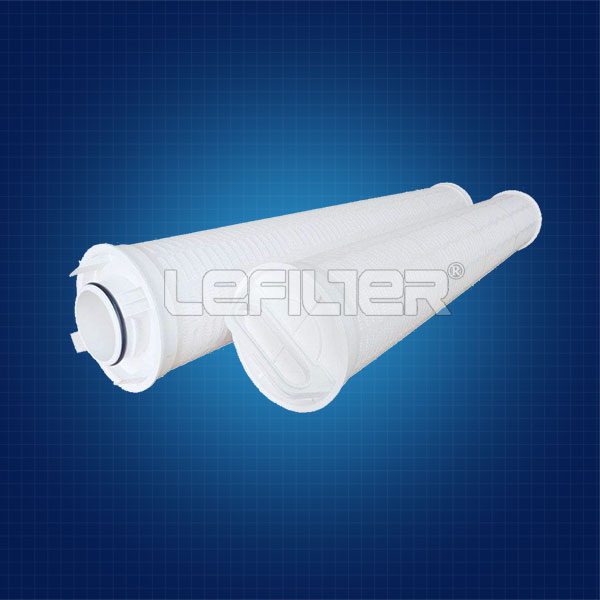
This high flow filter cartridge is a 6 in (152 mm) diameter, 40 in (1016 mm) long pleated element with a single open end and a blind opposite end, built for the circulating and rinse water of a paint line. One element flows 150–350 gpm (34–80 m³/h) at low differential pressure, which matters here because pre‑treatment spray headers are pressure‑sensitive and a throttled header changes the spray pattern that the process was validated on. A two‑element water filter housing sits beside a stage tank or on the discharge of a rinse booster pump; where the circulating stage water passes through a hydrocyclone or a media unit that must backwash on its own cycle, a self‑cleaning filter ahead of the cartridge keeps the pleats from receiving the backwash carry‑over as a slug. The element is a compatible‑format replacement; it is not an original equipment part and carries no manufacturer endorsement.
Working Principle
Water enters the housing and passes from the outside of the pleated pack inward, so all retained material stays on the upstream face and only clean water reaches the core, the header and the body. This outside‑in geometry is also what makes the element acceptable in a paint shop: nothing accumulates inside the core, so nothing can be flushed out into a rinse stage on the next start‑up.
The load in this service is fine and mixed. Phosphate sludge — zinc and manganese phosphate plus iron picked up from the body — is a soft, fine, chemically active solid that cakes firmly. Degreasing stage water carries oil and surfactant together with the same metal fines. Electrocoat rinse water carries paint pigment particles and, if the recovery loop is poorly controlled, a fraction of coagulated resin. Overspray from the paint booth, if the water curtain is included in the filtered circuit, arrives as coagulated film that behaves like a soft gel.
Two mechanisms govern element life here. The first is cake compaction: fine phosphate sludge forms a low‑permeability layer that compacts under flow, so differential pressure rises steadily rather than in steps. The second is oil wetting: surfactant and oil in degreasing water bind the cake and blind the pleat tips, exactly as in other oily duties, but with a much shorter time constant because the solids are finer.
The third mechanism is specific to this industry and is not a filtration mechanism at all. A pleated element is a potential source of fibre. If the medium sheds, the shed fibre lands on a body panel, and the resulting defect is indistinguishable from a process particle. For this reason the element must have a wrapped or bonded upstream surface, and downstream cleanliness must be checked at commissioning rather than assumed.

Typical Specifications
| Parameter | Value |
|---|---|
| Element format | 6 in × 40 in, single open end, blind end cap |
| Filtration rating | 1–5 μm absolute for final rinse; 5–10 μm for pre‑treatment circulating water |
| Media | Binder‑free borosilicate glass microfibre, pleated, with a non‑shedding melt‑blown or polyester upstream wrap |
| Core and cage | Polypropylene, thermally bonded; no glue lines exposed to flow |
| Gasket | EPDM standard; fluoroelastomer for oil‑bearing degreasing water |
| Maximum operating temperature | 80 °C (degreasing stage up to 60 °C continuous) |
| Maximum differential pressure | 50 psi (3.4 bar) |
| Collapse / burst rating | 75 psi (5.2 bar) |
| Recommended change‑out differential | 12–20 psi (0.8–1.4 bar) |
| Flow per element | 150–350 gpm (34–80 m³/h) |
| Housing | 2 or 3 element ASME shell in 316L stainless, mirror‑polished internally |
| Target outlet quality | no particle above 5 μm in rinse water; turbidity < 0.5 NTU at final rinse |
Core Advantages
Non‑shedding construction. A bonded upstream wrap and thermally bonded core mean the element does not contribute the very defect class it is installed to remove — the single most common reason a filter is rejected in a paint shop trial.
Fine absolute ratings at high flow. One or two elements deliver 1–5 μm absolute filtration at 150–350 gpm, which is what makes final‑rinse polishing economically possible.
Stable pressure loss for header‑critical duty. Because the outside‑in geometry keeps the cake on the element and the core clear, differential pressure is predictable, and spray header pressure does not drift as the element loads.
Oil‑tolerant pleats for degreasing water. Deep pleats with a rigid support layer hold their shape under an oil‑bound cake, so the element does not collapse into its own valleys.
Hygienic serviceability. A mirror‑polished stainless housing with a drain at the low point can be cleaned and returned to service without introducing a biofilm niche.
Application Scenarios
Pre‑treatment degreasing and phosphating circulating water, where sludge control decides bath life and coating adhesion.
Post‑phosphate rinse stages, where residual sludge on the body becomes an adhesion failure after the oven.
Electrocoat ultrafiltrate and permeate rinse loops, where pigment particles cause film defects.
Deionised water final rinse before the paint booth, where a single particle is a visible defect.
Paint booth water curtain circuits after coagulant dosing, where paint sludge must be removed before the water returns to the nozzles.
Air‑house and humidification water, where dissolved and suspended solids cause nozzle scaling and droplet carry‑over.

Competitive Position and Replacement Notes
This element is offered as an independent compatible replacement for large‑format high‑flow envelopes used in paint shop water circuits. Brand names and model designations that appear in this article, and in any cross‑reference table supplied with a quotation, are trademarks of their respective owners, and are used only to describe dimensional and functional compatibility. There is no affiliation with, sponsorship by, or approval from any original manufacturer, and no original equipment parts are supplied.
A cross‑reference confirms envelope, connection and duty class; it does not confirm media grade, efficiency curve, gasket compound, collapse rating or fibre‑release behaviour. In this service the last item is decisive and cannot be inferred from a brand claim: a supplier should be able to state the upstream wrap type, the bonding method and the test used to confirm no shedding downstream of the element.
Selection Guide
Define the stage before choosing a rating. Final deionised rinse normally justifies 1–5 μm absolute; pre‑treatment circulating water is usually 5–10 μm, where a finer element only shortens life without improving adhesion.
Confirm the element does not shed. Ask for the upstream wrap type, the bonding method and any downstream particle count data; a paint shop trial that fails on fibre is usually a construction failure, not a media failure.
Size on the header's pressure sensitivity. Pre‑treatment spray headers need stable pressure, so choose the largest element count the skid allows and accept a lower change‑out differential rather than a higher one.
Specify stainless steel and internal finish for the housing. Carbon steel with a coating can work in a technical water circuit but not where a biofilm or a coating blister would seed defects.
Set the gasket from the actual oil load. Degreasing stage water justifies fluoroelastomer; rinse water on a clean line is normally EPDM.
Build the change‑out criterion into the line's maintenance system. In a paint shop a filter change is a planned stop activity, and an unplanned one is a quality event.
Installation and Maintenance Notes
Seat the element on the centre post with the gasket fully engaged before closing the lid, and confirm the element is the correct length for the shell: a short element in a long shell bypasses at the top and passes unfiltered water without any leak.
Flush the housing to drain before first service. A new stainless housing carries swarf and passivation residue that will otherwise appear as defects in the first bodies through the line.
Log differential pressure daily and trend it rather than reading it. In this duty the useful signal is the slope: a steadily steepening curve means fine sludge compaction, and a sudden step means oil or a coagulant upset upstream.
Never open a housing in a paint shop without a clean containment tray and a defined route for the wetted element. The point of the filter is defeated if the change‑out itself introduces debris onto the floor of a cleanliness‑controlled area.
FAQ
Q1. Can a pleated element be used on final deionised rinse water?
A1: Yes, provided it is non‑shedding and the housing is stainless with a polished internal finish. This is the stage where construction quality matters most and where cost per element is least relevant.
Q2. Why do dirt defects persist after fitting a finer element?
A2: Usually the source is downstream of the filter: a contaminated housing, a leaking lid gasket, a nozzle that has already been damaged, or a filter that is shedding. Check downstream of the element before changing the rating.
Q3. Is a filter needed on the paint booth water curtain?
A3: The curtain needs sludge removal, which is normally done by coagulation and skimming. A cartridge is useful after that stage to protect nozzles, but it cannot replace the coagulation chemistry.
Q4. How does phosphate sludge differ from ordinary silt?
A4: It is finer, softer, chemically active and compacts strongly, so differential pressure rises steadily and the cake is harder to remove by any reversal. Element life is therefore shorter than the solids mass would suggest.
Q5. What is the risk of running past the change‑out differential?
A5: Cake compaction raises differential pressure quickly, the pleats blind at the tips, and if the element is disturbed during a stop the compacted sludge can be released downstream into a rinse stage.
Related Products
RTM61HF200E 60 Inch High Flow Filter Cartridge
HFU660UY200H13 Replacement High Flow Filter Cartridge
Pentair Aqualine ALN01‑60B Large‑Diameter High‑Flow Pleated Filter Cartridge
3M 5613503 HF90 Quick‑Connect 0.2μm High‑Flow Water Filter Cartridge
Please fill in your procurement needs and contact information