

How to Select the Right High Flow Filter Cartridge for RO Pre-Treatment
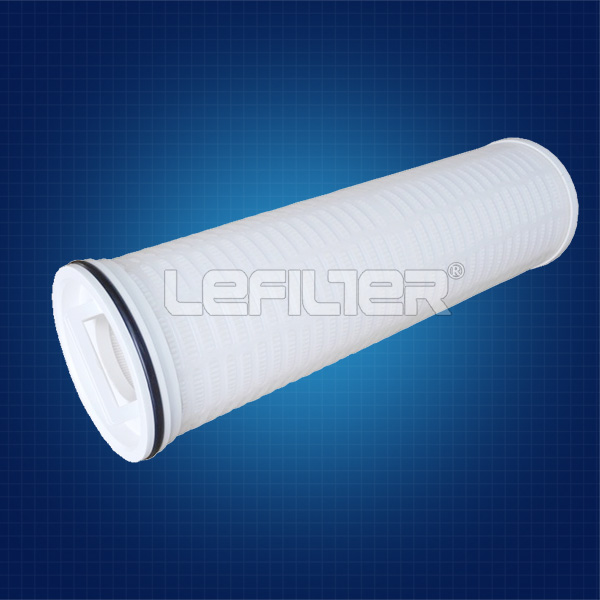
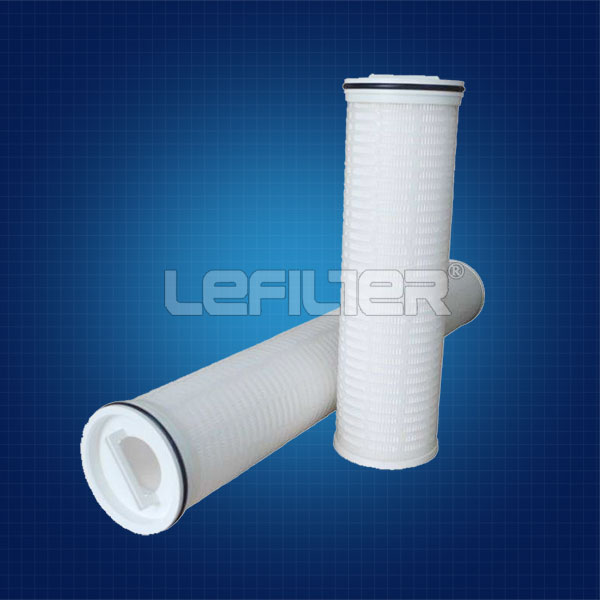
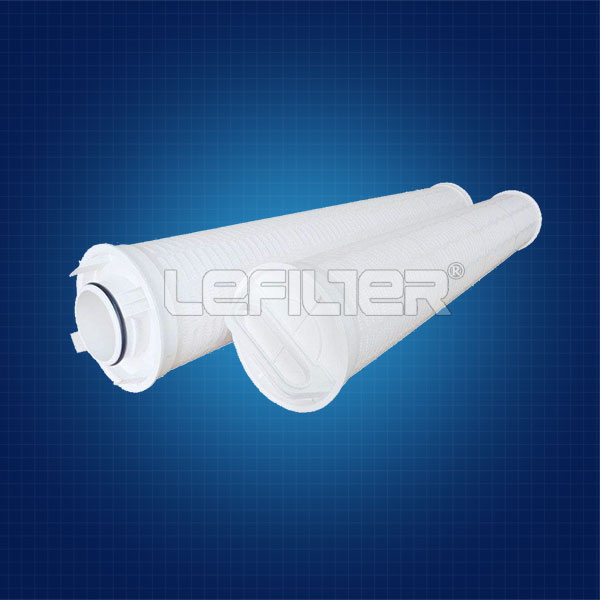
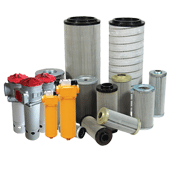
Introduction:RO membrane is the core component of a reverse osmosis water treatment system, yet most premature membrane fouling originates from inadequate pre-filtration. The high flow filter cartridge serves as the final guard filter for RO pretreatment, intercepting suspended solids, colloids and metal oxides before water enters membrane elements. Picking an unsuitable filter will accelerate RO membrane contamination, raise differential pressure, trigger frequent chemical cleaning and increase overall operational expenditure. When configuring your water filter housing and upstream self-cleaning filter, engineers and procurement teams need to evaluate multiple parameters instead of only focusing on micron rating or physical dimensions. This article breaks down core selection standards, common pitfalls and recommended configurations for high flow filter cartridges in RO pre-treatment applications.
We're here to help:
Easy ways to get the answers you need.
Product parameter:
Introduction

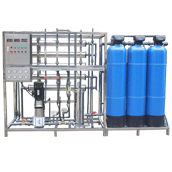
A reverse osmosis system relies heavily on stable pre-treatment to protect expensive RO membranes. Even tiny particulate contaminants, iron oxides and residual flocculants can stick tightly to the membrane surface, reducing permeate flow and shortening membrane service life. The high flow filter cartridge acts as the last barrier before the RO skid. Many industrial buyers only compare price or micron grade when purchasing filter elements, ignoring media compatibility, sealing structure, flow direction and housing matching. When designing the whole filtration train including water filter housing and upstream self-cleaning filter, every parameter of the high flow filter cartridge will directly affect the uptime and maintenance frequency of your RO plant. Selecting a properly matched high flow cartridge helps extend membrane lifespan, cut downtime and stabilize water output quality.
Why RO Pre-Treatment Needs High Flow Filtration
RO membranes feature ultra-fine pore structures that are extremely sensitive to particulate fouling. Any unfiltered suspended particles, colloidal silica, iron and copper oxides, or leftover polymer flocculants can form a dense fouling cake on the membrane surface. Traditional small filter cartridges require many elements to achieve the same flow rate, which increases housing size, installation workload and maintenance costs. High flow filter cartridges deliver large throughput with fewer filter elements, minimizing the footprint of the security filter vessel while maintaining reliable particle retention. The main contaminants that high flow cartridges intercept for RO protection include:
Suspended solid particles from raw water
Colloidal silica and organic colloids
Iron and copper oxide sediments from pipeline corrosion
Residual precipitates from coagulation and flocculation
Key Selection Criteria for High Flow Filter Cartridges
1. Micron Rating
Micron rating defines the minimum particle size the filter can capture. Typical options for RO pretreatment cover 5μm,10μm,20μm and 50μm. Higher precision (smaller micron value) offers better particle removal, but brings faster clogging and shorter service cycles. You need to balance filtration performance and dirt holding capacity according to raw water quality.
5μm: For raw water with high iron oxide and colloid loads
10μm: Most widely used for standard municipal water and general industrial RO pretreatment
20μm: For stable, low-turbidity inlet water
50μm: Only used for coarse pre-filtration, not as the final RO security filter
2. Filter Media Material
Media material decides chemical resistance, temperature tolerance and dirt holding capability.
Polypropylene (PP pleated media): The mainstream option for RO pre-treatment. It resists most aqueous chemicals, low cost, excellent particle holding capacity, suitable for neutral water conditions.
Glass fiber media: Higher temperature resistance and better removal efficiency for fine colloids, but weaker resistance to strong alkaline fluids.
Composite specialty media: Custom blend media for complex wastewater with mixed organic and inorganic pollutants, usually at a higher price point.
3. Seal Material
Seal is critical to prevent fluid bypass. Even a tiny leak in the seal will let unfiltered contaminants pass through and damage RO membranes.
EPDM: The preferred seal material for most RO pretreatment water systems. Compatible with normal water, moderate temperature and common water treatment chemicals.
Viton (FKM): Used in harsh conditions with solvents, oils or strong oxidizing chemicals. Not required for standard raw water RO projects.
4. Flow Direction
Inside-to-out flow design is strongly recommended for RO pre-treatment. With this structure, all captured dirt stays trapped inside the filter core. When replacing cartridges, trapped contaminants will not drop downstream into the RO pipeline. This design effectively protects membrane elements during filter change-out. Outside-to-in flow is less favorable for RO protection, as accumulated contaminants may fall off during replacement and flow toward membranes.
5. Housing Compatibility
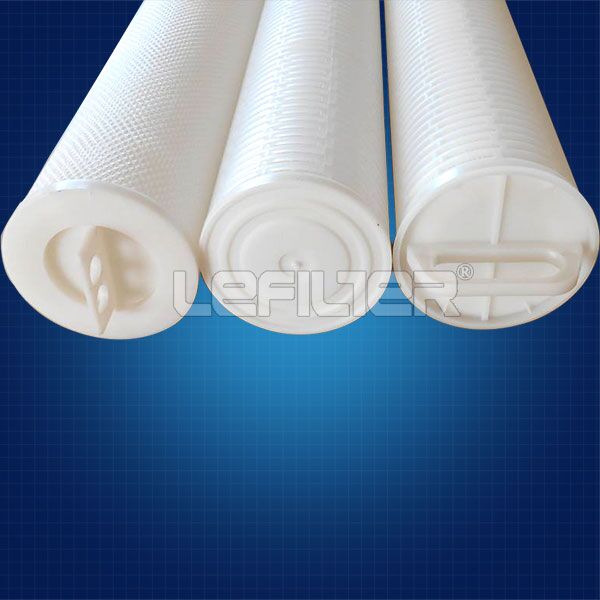
Your chosen high flow filter cartridge must fit perfectly into your water filter housing. Confirm these dimensions before ordering: overall length, outer diameter, inner core diameter, end cap style and sealing interface. Mismatched dimensions will cause poor sealing, bypass or impossible installation. Always check the vessel’s manufacturer specification and available cartridge adaptors.
Common Mistakes in High Flow Cartridge Selection
Mistake 1: Select only based on micron rating
Many buyers assume smaller micron always means better protection. Overly fine filters will block quickly, resulting in frequent replacement and higher long-term cost. You need to match micron rating to your upstream pre-treatment performance. If your upstream clarifier or self-cleaning filter already removes large particles, you may not need 5μm cartridges.
Mistake 2: Neglect seal chemical compatibility
A seal that works for clean tap water may swell or degrade when exposed to chlorine, acid or alkaline dosing chemicals. Damaged gaskets create bypass paths, rendering the filter useless even if the filter media remains intact.
Mistake 3: Ignore end cap and housing interface
Different brands adopt different DOE / SOE end cap structures. A cartridge with the wrong end cap cannot seal properly in your existing water filter housing, leading to unfiltered water bypassing the media.
Mistake 4: Replace cartridges too early or too late
The standard replacement trigger is the designed pressure differential. If you replace too early, you waste filter cost. If you keep running after exceeding maximum differential pressure, the filter media may collapse, releasing trapped particles straight to RO membranes.
Recommended Configuration for RO Pre-Treatment
Light fouling raw water
Filter precision: 20μm
Application: Low turbidity raw water, well water with stable water quality
Advantages: Large dirt holding capacity, long service interval, low maintenance frequency
Moderate fouling raw water
Filter precision:10μm
Application: Municipal water, general industrial circulating water, standard RO pretreatment
Advantages: Balanced filtration efficiency and service life, the most popular specification for most projects
Heavy fouling raw water
Filter precision:5μm
Application: Water containing high iron oxide, heavy colloids, high suspended solids
Advantages: Superior fine particle protection, requires regular monitoring of pressure drop
How to Integrate High Flow Cartridge with Self-Cleaning Filter
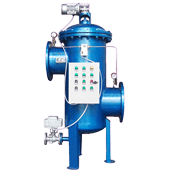
For medium and large-scale RO plants, a staged filtration train delivers optimal protection. The typical sequence is: Raw water → self-cleaning filter → high flow filter cartridge vessel → RO membrane skid The self-cleaning filter removes large debris, sand and big suspended particles continuously, reducing the contaminant load for downstream high flow cartridges. This combination greatly extends high flow cartridge service life and cuts filter consumption. Without a coarse upstream self-cleaning filter, high flow cartridges will bear the full contaminant load and clog rapidly, increasing your running cost significantly.
Conclusion
Choosing the right high flow filter cartridge for RO pretreatment is a systematic job instead of a simple model selection task. You need to evaluate raw water quality, required micron rating, filter media, seal material, flow direction and compatibility with your existing water filter housing and upstream self-cleaning filter. A properly selected high flow filter cartridge reduces particulate load on RO membranes, lowers chemical cleaning frequency, and stabilizes permeate production. By avoiding common selection mistakes, plant operators can minimize unplanned downtime and reduce the total cost of ownership for the whole reverse osmosis water system.
FAQ
Q1: What micron rating is best for RO pre-treatment high flow filter cartridge?
A: 10μm is the most common choice for general RO systems. 5μm is used for water with high colloid and iron content, while 20μm works for clean, low-turbidity well water.
Q2: Inside-to-out or outside-to-in, which flow direction is better for RO security filtration?
A: Inside-to-out is recommended. Contaminants stay trapped inside the filter core, avoiding releasing dirt downstream during cartridge replacement.
Q3: Can I mix different brands of high flow cartridges inside one water filter housing?
A: Not recommended. Different manufacturers may have slight differences in end cap dimension and sealing geometry, which can cause bypass risk. Use cartridges with consistent end cap specifications.
Q4: When should I replace my high flow filter cartridges?
A: Replace when the pressure differential across the filter vessel reaches the manufacturer’s threshold, normally around 25 psi. Do not continue operation beyond maximum rated differential pressure.
Q5: Is a self-cleaning filter necessary before high flow filter cartridges for RO?
A: For water with high sand and large solids, yes. Self-cleaning filters remove large particles upfront and reduce the dirt load of high flow cartridges, extending their service cycles.
Related Products
RTM61HF200E 60 Inch High Flow Filter Cartridge
HFU660UY200H13 Replacement High Flow Filter Cartridge
Pentair Aqualine ALN01‑60B Large‑Diameter High‑Flow Pleated Filter Cartridge
3M 5613503 HF90 Quick‑Connect 0.2μm High‑Flow Water Filter Cartridge
PFTM3‑40U‑HFJ 40‑Inch High Flow Pleated Filter Cartridge
Please fill in your procurement needs and contact information