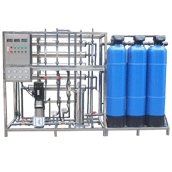


RO Membrane Module for Zero Liquid Discharge Brine Concentration Stage
Introduction:Zero liquid discharge (ZLD) systems aim to recover almost all process water and leave only solid salts for disposal, which places a heavy separation load on the brine concentration stage. An RO membrane module installed after the primary RO and softening/scale-control stage further concentrates saline brine and reduces the volume sent downstream to evaporators and crystallizers. Stable membranes, careful antiscalant and pH control, and scheduled cleaning help minimize scaling and organic fouling, lower evaporation load, and keep the ZLD train operating at target water recovery.
We're here to help:
Easy ways to get the answers you need.
Product parameter:
Product Introduction
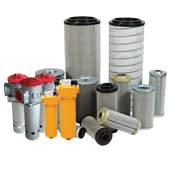
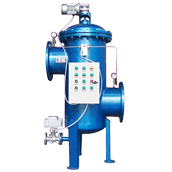
LEFILTER RO membrane modules for ZLD brine concentration are spiral-wound thin-film composite elements built for high-salinity secondary-concentration duty after primary RO and pretreatment. The range covers standard 4040 and 8040 formats with compatible center tubes, end caps and seals, allowing retrofit into existing high-pressure vessels and concentration skids. On a ZLD brine train, the concentration RO is protected upstream by a water filter housing holding security cartridges that trap residual particulates, and a self-cleaning filter continuously removes suspended solids and colloidal load before the membrane inlet.
The modules are selected for stable salt rejection and permeate quality at elevated brine concentration, robust performance under controlled high-pressure operation, and cleanability under scheduled CIP. They are positioned as independent compatible replacement elements, not original manufacturer products; referenced brand names are used only to describe fit and performance equivalence.
Working Principle
In a ZLD brine concentration loop, primary RO concentrate, conditioned with softening or antiscalant and polished by filtration, is pressurized into the spiral-wound RO module. Water molecules pass through the semi-permeable membrane leaf and travel along the permeate spacer to the central collection tube; this permeate is typically returned to the front of the water train for further polishing or reuse. Remaining dissolved salts and scale-forming ions are rejected and concentrated into the brine stream, which is sent to the next concentration step, evaporator or crystallizer.
The feed spacer maintains turbulent cross-flow to limit settlement of salts and solids; the permeate spacer guides purified water to the outlet; end-cap seals prevent feed-to-permeate bypass. Because brine concentrates rapidly in this stage, scaling risk from calcium sulfate, silica, barium and strontium is high, so consistent softening, antiscalant dosing, pH control and timely CIP are essential to preserve flux and rejection over module life.
Typical Specifications
Core Advantages
Brine volume reduction:
concentrates primary RO reject to cut downstream evaporator and crystallizer load and energy use.
Stable salt rejection:
maintains permeate quality for return to the water train at elevated brine concentration.
Scale-conscious design:
compatible spacer and sheet geometry support controlled cross-flow in high-TDS concentration duty.
Cleanable performance:
broad cleaning pH window supports acid and alkaline CIP to recover flux from scale and organic fouling.
Drop-in compatibility:
standard 4040 / 8040 dimensions and connections suit replacement in existing ZLD concentration vessels and skids.
Application Scenarios
ZLD and minimal-liquid-discharge front-end brine concentration after primary RO.
High-salinity industrial wastewater trains ahead of evaporators, MVR or crystallizers.
Mining, power, chemical and oily-water ZLD schemes requiring brine volume reduction.
Secondary RO concentration where permeate is recovered and reject is sent to thermal treatment.
Competitive Position and Replacement Notes
LEFILTER modules are compatible replacement membranes evaluated against common industrial RO formats from brands such as DuPont FilmTec, Dow, Hydranautics, Toray, Suez and 3M. They are not original-equipment products of those manufacturers; brand references are for cross-reference and fit comparison only. Performance depends on brine chemistry, scaling potential, pretreatment condition, recovery rate, temperature and operating pressure, and should be validated on-site before full ZLD operation.
Selection Guide
Brine chemistry:
analyze calcium, sulfate, silica, barium, strontium and hardness; set softening, antiscalant and maximum concentration factor accordingly.
Recovery target:
match membrane area, pressure and recovery to the brine concentration needed to reduce evaporator load without crossing saturation limits.
Pretreatment readiness:
verify softening, filtration, security cartridge and antiscalant dosing performance; unstable scale precursors upstream will foul the concentration RO rapidly.
Pressure and temperature:
confirm pump head and feed temperature stay within the module design window; high pressure or temperature excursions shorten membrane life.
Oxidation control:
ensure residual chlorine and oxidants are removed before the membrane inlet to protect the polyamide sheet.
Installation and Maintenance Notes
Flush and clean new vessels and piping before loading modules; remove construction debris, oil and residual chemicals.
Load elements gently with seal lubrication; avoid dry twisting, pinching or seal damage during insertion.
Start pumps gradually and raise pressure and flow slowly to prevent compaction and hydraulic shock in high-pressure service.
Monitor permeate flow, conductivity, differential pressure and scaling trends; schedule CIP when flux drops, conductivity rises or pressure climbs indicate scale or fouling.
Store spare modules wet in preservative solution within the recommended temperature range; do not allow membrane leaves to dry out.
FAQ
Q1. Is this the same as a primary RO membrane?
A1: No. This module serves the secondary brine concentration stage after primary RO, where feed TDS and scaling potential are much higher. It is selected for concentration duty under conditioned brine chemistry, not for raw feed treatment.
Q2. Does concentrating brine cause scaling?
A2: Yes. As water is removed, salts such as calcium sulfate, silica, barium and strontium can approach saturation. Softening, antiscalant dosing, pH control and limited concentration factor are required to prevent membrane scaling.
Q3. Where does the concentrate go after this stage?
A3: The concentrated brine is typically sent to a further concentration step, evaporator, MVR or crystallizer for solid salt management; recovered permeate is returned to the front of the water train.
Q4. Are the modules compatible with existing 8040 vessels?
A4: Standard 8040 and 4040 elements use conventional center tubes, end caps and seal arrangement. Confirm vessel pressure rating, inner diameter, connector style and brine seal fit before installation.
Q5. What shortens module life in a ZLD concentration stage?
A5: Poor softening or scale control, antiscalant dosing gaps, silica or sulfate scaling, pH and temperature excursions, residual oxidants, delayed CIP and excessive recovery all accelerate irreversible performance loss.
Related Products
BW30FR-400/34 Water Treatment RO Reverse Osmosis Membrane
40-inch RO membrane water purifier membrane
High Efficiency Reverse Osmosis Membrane for Water Treatment
Commercial Reverse Osmosis Membrane for Pure Water System
High Salt Rejection RO Membrane for Brackish Water Treatment
Please fill in your procurement needs and contact information