

Skid-mounted RO Desalination Unit for Well Water Treatment
Introduction:Deep and shallow well water often carries high hardness, fluoride, nitrate, chloride, dissolved salts and occasionally iron and manganese. Left untreated, this water scales boilers and pipes, affects drinking taste, and fails the quality standard required by food, irrigation or industrial users. A skid-mounted RO desalination unit treats well water on site, removing dissolved salts and impurities in one packaged train that can be installed, connected and commissioned quickly. This article explains how the unit is configured, how it adapts to typical well water chemistry, and how buyers should size and select a system against their own water analysis rather than a generic output rating.
We're here to help:
Easy ways to get the answers you need.
Product parameter:
Product Introduction
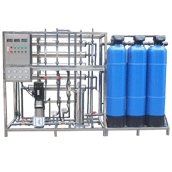
This skid-mounted RO desalination unit is a packaged treatment train built specifically for well water sources, whether the well feeds a factory boiler house, a farm irrigation network, a village water supply or a commercial drinking water plant. The whole system — raw water pump, pre-treatment vessels, a water filter housing holding security cartridges, booster pump, membrane array, CIP unit and control cabinet — is assembled on one steel skid, so site work is reduced to connecting inlet, outlet, concentrate discharge and power. Where the well water carries seasonal silt, fine sand or iron precipitate, the inlet section can be configured as a self-cleaning filter that screens grit automatically on a differential pressure or timer signal, keeping the downstream cartridges and membranes protected without daily manual cleaning. Pre-treatment is matched to the actual well water profile: media filtration removes turbidity and suspended matter, softening counters hardness and scaling risk, and activated carbon reduces residual odor and organic matter before the membrane feed. All wetted components in contact with treated water use food-grade stainless steel or sanitary piping, and the control panel monitors permeate conductivity, flow and pressure continuously. Imported packaged desalination plants often carry a high purchase price, long delivery lead time and a single supplier for spare membranes and instruments. Our skid uses standard-dimension membranes and mainstream instruments interchangeable with multiple brands, and the PLC program is documented and adjustable by the local maintenance team, giving well water users a lower-cost, serviceable alternative that still meets the required water quality target.
Working Principle

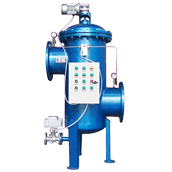
Well water is first drawn into the raw water tank or feed pump, which buffers the variation in pressure and yield that occurs as the water level in the well changes. Before entering pre-treatment, water may pass the self-cleaning filter, which screens coarse sand, silt and iron particles at a defined micron rating and backwashes automatically when the screen loads up.
The filtered water then moves through the pre-treatment vessels. A multi-media filter traps suspended solids and reduces turbidity. A softener exchanges calcium and magnesium ions for sodium, removing the hardness that would otherwise precipitate as scale on the membrane surface. An activated carbon filter adsorbs residual odor, taste and organic compounds, and also protects the membrane from free chlorine where the well source has been disinfected.
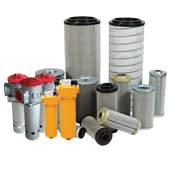
A security cartridge inside the water filter housing, normally rated 5 micron, forms the last barrier before the high-pressure pump, catching any residual fines so they cannot score the membrane feed channel.
The booster pump raises pressure to the level required by the membrane design flux. In the pressure vessels, well water splits into two streams: permeate passes through the semi-permeable polyamide membrane, while dissolved salts, hardness residual, fluoride, nitrate and other rejected ions concentrate into the concentrate stream. Permeate flows to the treated water tank, and concentrate is discharged to a drainage channel, evaporation pit or recycling line depending on the local permit.
The PLC records inlet and outlet pressure, permeate conductivity, flow and recovery rate. When normalized flow declines or differential pressure rises beyond the set limit, the CIP unit runs acid and alkaline cleaning cycles to remove scale and organic fouling, restoring membrane performance without removing elements from the vessels.
System Configuration and Typical Specifications
| Item | Typical Range |
|---|---|
| Rated output | 0.5 to 30 m³/h, customized |
| Feed TDS | Up to 3000 mg/L standard, higher with special array |
| Recovery rate | 50 to 70 percent, single stage |
| Pre-treatment | Media filter, softener, activated carbon, optional self-cleaning filter |
| Security filtration | 5 micron cartridge in stainless housing |
| Membrane element | 4040 / 8040 spiral wound, multi-supplier compatible |
| Operating pressure | 10 to 15 bar for brackish well water |
| Permeate conductivity | Below 10 μS/cm, adjustable by application |
| Control | PLC touch screen, automatic flush and alarm logging |
| Structure | Steel skid with anti-rust coating, 304/316L wetted parts |
| Power supply | 220V single phase / 380V three phase, customized |
Core Advantages
Packaged skid delivery:
all major equipment pre-assembled, piped and tested in the workshop, cutting civil installation and on-site commissioning time.
Well-water-specific pre-treatment:
media, softener and carbon stages are sized on the measured hardness, iron and turbidity of the actual source, not on a municipal water template.
Automatic coarse filtration:
the self-cleaning filter handles seasonal silt without frequent manual cartridge changes, which matters at remote well sites with limited staff.
Stable permeate quality:
continuous conductivity monitoring and controlled cross-flow keep the treated water within a narrow quality band as the well level and chemistry change through the year.
Interchangeable membranes:
standard element dimensions and vessel connections allow replacement from multiple supply channels, avoiding single-vendor spare part dependency.
Flexible layout:
the skid fits inside a small pump house or outdoor shelter, and additional membrane modules can be added later if the water demand grows.
Documented maintenance logic:
trend-based CIP triggers, alarm history and a spare parts list let the site team run the system independently after training.
Application Scenarios

Village and town drinking water supply from deep wells
Factory process water and boiler feed water from well sources
Farm irrigation and livestock water desalination
Food and beverage processing water from brackish wells
Commercial bottled and barreled water production
Construction camp and remote site utility water
Mining and quarry camp water supply
Wells with high hardness, fluoride or nitrate requiring desalination
Competitive Position and Replacement Notes
Buyers evaluating packaged RO units usually meet three problems. First, many standard systems are designed around stable municipal water and perform poorly when the well carries high hardness, iron or seasonal silt, so membranes scale and foul within a short service cycle. Second, imported units lock owners into one supplier for membranes, seals and instruments, and parts lead times can be weeks while the well water supply waits. Third, the total cost including freight, foundation works and commissioning supervision often exceeds a smaller project budget.
Our skid is specified against the site's own well water analysis: hardness, iron, manganese, silica, fluoride, nitrate, TDS and seasonal variation all feed into pre-treatment sizing and membrane array selection. The security filter housing and screen rating are matched to the actual silt load, and the softener capacity is set against the worst-case hardness in the dry season. Membrane elements follow standard dimensions compatible with qualified suppliers, and common consumables are stocked for routine replacement. The PLC program is delivered with documentation, and commissioning guidance and operator training are included so the local team can maintain the system on its own.
We supply this equipment as an independent packaged unit and are not affiliated with any membrane or packaged plant brand. Brand references appear only where compatibility needs to be described.
Selection Guide
Obtain a full well water analysis: TDS, hardness, alkalinity, iron, manganese, fluoride, nitrate, chloride, silica, pH and turbidity, repeated if the source varies between seasons.
State the intended use of treated water, because drinking water, boiler feed, irrigation and food processing each imply a different quality target and post-treatment step.
Define daily demand and peak hourly flow, and reserve 15 to 20 percent margin for future expansion and CIP consumption.
Choose pre-treatment depth against the measured iron and hardness: iron removal filtration where ferrous iron is present, softener where hardness drives scaling risk.
Decide whether the self-cleaning filter is needed. It is recommended for shallow wells and surface-influenced sources with seasonal silt; a basic strainer may suffice for clean deep wells.
Confirm concentrate disposal: drainage, evaporation or reuse, since this limits the achievable recovery rate.
Specify shelter conditions, ambient temperature range, electrical standard and skid footprint, especially for remote wells without a permanent plant room.
Agree the commissioning scope, spare parts package and operator training before shipment.
Installation and Maintenance Notes
Set the skid on a level, load-bearing foundation with drainage, and leave clearance for membrane vessel removal. Protect the equipment from direct rain and sun if placed outdoors, and keep the area free of flooding risk in wet seasons. Check that the raw water tank or feed pump delivers stable pressure before the system starts.
Record normalized permeate flow, salt rejection, recovery and differential pressure daily, and compare against the commissioning baseline. Run CIP when the trend signals fouling rather than waiting for output to collapse. Replace security cartridges at the stated differential pressure, and never run with a ruptured cartridge, since grit reaching the membrane feed channel can cause permanent damage. Test softener outlet hardness regularly and verify the brine cycle works correctly.
During long shutdowns, flush membranes with permeate water and follow the preservation procedure to prevent biological growth. Keep spare cartridges, seals and instruments on site according to the recommended list, and log every change so early signs of pre-treatment trouble appear in the consumption record.
FAQ
Q1: Can this unit remove fluoride and nitrate from well water?
A1: Yes. RO membranes reject most dissolved salts, including fluoride and nitrate, and the permeate quality is verified against your target after commissioning. If the well source has an extreme concentration, the array may be arranged in two stages to meet the final limit.
Q2: How do I decide between a softener and full RO treatment?
A2: A softener only removes hardness. RO removes hardness together with salts, fluoride, nitrate and most other dissolved contaminants. Choose RO when the treated water must meet a drinking water or process water quality target, not just scale control.
Q3: What recovery rate is typical for a well water RO skid?
A3: Usually 50 to 70 percent, depending on hardness, silica and concentrate disposal capacity. Higher recovery saves water but raises scaling risk, so the figure is set against the water chemistry and local discharge rules.
Q4: Can the system run unattended at a remote well site?
A4: With automatic self-cleaning filtration, PLC control and remote alarm routing, routine attendance is a daily check plus periodic CIP and cartridge replacement. Alarms can be sent to a control room or mobile phone so faults are noticed before the treated water tank runs low.
Q5: Are replacement membranes available from other suppliers?
A5: Yes. The pressure vessels and element dimensions follow the mainstream 4040 and 8040 standard, so qualified elements from multiple suppliers can be fitted. We also supply our own elements with traceable performance data if preferred.
Related Products
BW30FR-400/34 Water Treatment RO Reverse Osmosis Membrane
40-inch RO membrane water purifier membrane
High Efficiency Reverse Osmosis Membrane for Water Treatment
Commercial Reverse Osmosis Membrane for Pure Water System
High Salt Rejection RO Membrane for Brackish Water Treatment
Please fill in your procurement needs and contact information