

Industrial RO Plant for Food & Beverage Water Purification
Introduction:Water is a direct raw material in beverage, dairy, juice and food processing plants, so its mineral content, bacterial load and organic residue affect taste, shelf life and product consistency. Municipal supply and well water often vary in hardness, chloride, nitrate and suspended solids, which makes a single fixed treatment configuration unreliable. This industrial RO plant combines pre-treatment, reverse osmosis and post-treatment into one skid, sized to the daily water demand of a food or beverage line. It gives plant managers a predictable water quality baseline that supports recipe control, CIP cleaning and compliance with local drinking water and food safety requirements.
We're here to help:
Easy ways to get the answers you need.
Product parameter:
Product Introduction
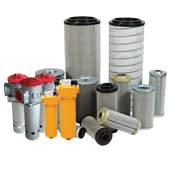
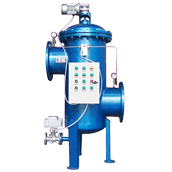
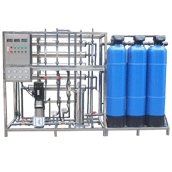
This industrial RO plant is a complete water purification system designed for food, beverage, dairy, juice, sauce and edible oil production. It is built as one integrated skid, consisting of raw water pump, multi-media pre-treatment, a water filter housing carrying precision cartridges, reverse osmosis membrane arrays, CIP cleaning unit, conductivity monitoring and a treated water storage loop. Where raw water carries high and fluctuating suspended solids, the front section can be configured as a self-cleaning filter, so that river water, reservoir water or well water with sediment is handled automatically without daily manual cartridge replacement or operator intervention. The membrane section uses low-energy spiral wound elements with a standard 4040 or 8040 configuration, arranged in a single-stage or two-stage array depending on recovery target. All wetted parts in contact with treated water use sanitary-grade stainless steel or food-grade piping, and dead legs are minimized to control microbial growth. Imported RO plants from established brands carry a purchase price that often reaches several times the cost of an equivalent domestic system, and their spare membranes, seals and instruments can only be sourced through the original supplier. Our configuration addresses both problems: the hydraulic layout and control logic follow the same engineering standard, membrane elements are interchangeable with mainstream brands, and the PLC program is open for adjustment by the plant's own maintenance team. Recovery ratio, permeate conductivity and hourly output are specified against the customer's water analysis before shipment, so the system arrives with a defined performance target rather than a nameplate number.
Working Principle

Raw water enters the system through the intake pump and passes the pre-treatment stage first. Multi-media filtration removes suspended solids and turbidity, and an activated carbon stage adsorbs residual chlorine, taste and organic matter. Chlorine removal is essential, because free chlorine oxidizes and permanently damages polyamide RO membranes. A water softener is added where hardness is high, preventing calcium and magnesium scale from forming on the membrane surface.
Water then passes the precision cartridge housing, typically rated at 5 micron, which acts as a security barrier protecting the membrane feed channel from residual particles and from media fines carried over from the pre-treatment vessels.
The booster pump raises pressure to the level required by the membrane's design flux, normally between 10 and 15 bar for brackish water. Feed water is distributed across the membrane array. Under pressure, water molecules pass through the semi-permeable polyamide layer, while dissolved salts, heavy metals, bacteria, viruses and most organic molecules are rejected and directed to the concentrate stream. Permeate flows into the treated water tank, while a portion of the concentrate is returned through an energy recovery or recirculation line to maintain cross-flow velocity across the membrane surface and reduce scaling risk.
After the membrane, the permeate passes a post-treatment stage. Depending on the product requirement, this may include a UV sterilizer, a 0.22 micron sterile filter, or a mineral dosing unit that restores a target hardness for beverage taste. Conductivity, pH, ORP and flow are monitored continuously, and the PLC records the trend so that a shift in water quality is detected before it reaches the production line.
A CIP unit is connected to the membrane section. When normalized permeate flow drops by 10 to 15 percent, or the differential pressure across the array rises beyond the set limit, the system runs a cleaning cycle with low-pH and high-pH solutions to remove inorganic scale and organic fouling respectively.
System Configuration and Typical Specifications
| Item | Typical Range |
|---|---|
| Rated output | 0.5 to 50 m³/h, customized |
| Recovery rate | 50 to 75 percent, single or double stage |
| Membrane element | 4040 / 8040 spiral wound, interchangeable |
| Pre-treatment | Multi-media + activated carbon + softener |
| Security filtration | 5 micron cartridge in stainless housing |
| Operating pressure | 10 to 15 bar (brackish water), higher for special sources |
| Conductivity of permeate | Below 10 μS/cm, adjustable by application |
| Control | PLC with touch screen, automatic flush and alarm |
| Piping material | 304 / 316L stainless steel, food-grade UPVC option |
| Power supply | 380V three phase, 50Hz, customized |
Core Advantages
Complete skid, single supplier:
pre-treatment, membrane, CIP, instrumentation and control are integrated and tested before dispatch, which removes the interface risk of buying separate units.
Stable permeate quality:
two-stage array and controlled cross-flow velocity keep conductivity within a narrow band, so beverage recipes do not drift with seasonal raw water changes.
Hygienic construction:
sanitary stainless piping, minimized dead legs, and sterile filtration options support CIP and microbial control requirements in food plants.
Automatic operation with data logging:
flush cycles, cleaning reminders and alarm history reduce dependence on experienced operators, which matters in shift-based factories.
Interchangeable membranes:
elements can be replaced from multiple supply sources, avoiding the single-channel spare part dependency typical of imported packaged plants.
Scalable layout:
additional membrane modules and a second skid can be added later, so capacity can grow with production volume without replacing the whole system.
Application Scenarios

Bottled water, carbonated drink and juice production lines
Dairy, yogurt and milk powder processing water supply
Sauce, condiment and edible oil production
Brewery and distilled beverage process water
Food ingredient extraction and concentration
Retort, cooling and CIP cleaning water in food factories
Central kitchen and catering supply chain water treatment
Food factory boiler feed water pre-treatment where low hardness is required
Competitive Position and Replacement Notes
Buyers comparing imported packaged RO plants usually raise three concerns. The first is price, since a fully imported system with the same output can cost substantially more, and the gap widens once freight, installation supervision and commissioning are included. The second is service response, because membrane replacement, instrument recalibration and PLC troubleshooting often need parts shipped from overseas, while a food plant cannot pause production for weeks. The third is configuration fit, since imported standard models are built around typical municipal water, and they perform poorly when the actual source is a well with high hardness or a river with seasonal turbidity spikes.
Our plant is specified against the customer's own water analysis rather than a generic template. Pre-treatment vessels, softener capacity and the security filter housing are sized to the actual silt density index and hardness of the source water, and the self-cleaning option is added where turbidity fluctuates. Membrane elements are sourced from qualified suppliers with traceable performance data, and their dimensions and pressure vessels follow the mainstream standard, so future replacement does not depend on a single vendor. Spare cartridge elements, seals and instrument parts are held in stock for common models, shortening the wait when maintenance is needed. The PLC program is delivered with documentation, and remote guidance during commissioning is provided as standard.
We supply this equipment as an independent system and are not affiliated with any membrane or packaged plant brand. Brand names appear only where compatibility needs to be described.
Selection Guide
Provide a complete raw water analysis:
turbidity, hardness, alkalinity, iron, manganese, chloride, nitrate, TDS, silica, COD and seasonal variation. Sizing without this data is guesswork.
Define the required permeate quality, including conductivity target, microbial requirement and any mineral profile the recipe depends on.
Confirm daily and peak hourly water demand, then allow a 15 to 20 percent margin for CIP water and future expansion.
Decide recovery rate against concentrate disposal options. High recovery reduces wastewater but raises scaling risk, and the balance depends on local discharge rules.
Choose pre-treatment depth based on source stability:
a self-cleaning filter for turbid surface water, a softener for hard well water, and both where the source varies seasonally.
Specify piping and tank material according to hygiene level:
304 stainless for general use, 316L where chlorides are elevated.
Confirm the electrical standard, ambient temperature and available installation space, since skid dimensions and control cabinet layout depend on them.
Ask for the commissioning plan and the training scope, because a correctly built plant still needs proper start-up to reach its design performance.
Installation and Maintenance Notes
Install the skid on a level, load-bearing floor with drainage nearby, and leave clearance for membrane vessel removal. Keep the intake line free of air pockets, and protect the pre-treatment vessels from direct sunlight where algae growth is possible.
Record normalized permeate flow, salt rejection and differential pressure daily. Compare against the baseline taken on the first day of operation, because membrane fouling is a trend, not a sudden event. Run the CIP cycle at the recommended interval rather than waiting for a severe drop in output. Replace security cartridges whenever the differential pressure rises by the stated margin, and never operate the plant with a ruptured cartridge, since particles reaching the membrane feed channel can cause irreversible damage.
Replace softener resin according to hardness testing, and verify that the brine tank draws and refills correctly. Keep the antiscalant or dosing system calibrated if it is installed. During shutdowns longer than a few days, flush the membranes with permeate and follow the preservation procedure, because stagnant feed water in the element promotes biological growth.
FAQ
Q1: What raw water quality can this RO plant accept?
A1: The standard configuration suits municipal water and well water with turbidity below 5 NTU, hardness within the softener's capacity and TDS up to roughly 2000 mg/L. For river water with seasonal turbidity or higher salinity, we adjust the pre-treatment and membrane array accordingly, so please share a water analysis before ordering.
Q2: How much water is rejected as concentrate?
A2: With a single-stage array the recovery rate is typically 50 to 60 percent, and a two-stage arrangement can reach 70 to 75 percent depending on feed quality. Higher recovery means less wastewater but greater scaling risk, so the final figure is set against your water chemistry and discharge regulations.
Q3: Are the membrane elements replaceable with other brands?
A3: Yes. The pressure vessels and element dimensions follow the mainstream 4040 and 8040 standard, so elements from qualified suppliers can be fitted. We also supply our own replacement elements, but the choice is not restricted to one source.
Q4: Can the system run unattended overnight?
A4: Yes, within limits. Automatic flush, level control and alarm interlocks allow unattended operation, but we recommend daily checks of permeate quality and differential pressure readings. Alarms should be routed to a phone or control room so that a fault is noticed before the storage tank runs low.
Q5: Does the plant need a UV or sterile filter after the membrane?
A5: RO removes bacteria and most viruses, but the storage tank and downstream piping can reintroduce contamination. For beverage filling and dairy applications we normally recommend a UV unit plus a 0.22 micron sterile filter at the point of use, and the exact combination depends on your hygiene protocol.
Related Products
BW30FR-400/34 Water Treatment RO Reverse Osmosis Membrane
40-inch RO membrane water purifier membrane
High Efficiency Reverse Osmosis Membrane for Water Treatment
Commercial Reverse Osmosis Membrane for Pure Water System
High Salt Rejection RO Membrane for Brackish Water Treatment
Please fill in your procurement needs and contact information