

The Mechanics of Automatic Backwash Technology
Introduction: Automaticbackwashfiltrationsystemsrepresentthepinnacleofself-sustainingindustrialwatertreatment.Thes
We're here to help:
Easy ways to get the answers you need.
Product parameter:
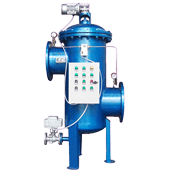
Automatic backwash filtration systems represent the pinnacle of self-sustaining industrial water treatment. These systems are designed to solve a fundamental problem: how to maintain a continuous flow of clean water when the source is heavily contaminated with sediment, scale, or organic matter. The internal architecture of an automatic backwash filter consists of a high-strength stainless steel screen and a motorized steering mechanism. Unlike manual filters that must be disassembled for cleaning, these units use the energy of the fluid itself—or an external motor—to purge intercepted solids. This allows the system to remain online indefinitely, protecting downstream equipment from the abrasive effects of suspended particles.

The "brain" of the automatic backwash filter is its control system, which monitors the pressure differential between the inlet and the outlet. As contaminants accumulate on the inner surface of the filter screen, the resistance to flow increases, causing the pressure to drop. Once a pre-set threshold is reached, the controller initiates the self-cleaning cycle. An internal steering valve or butterfly plate adjusts the flow path, while a sewage valve opens to the atmosphere. This creates a high-velocity reverse flow—often called an impulse—that strips the "filter cake" off the screen and flushes it out of the system. This automated response ensures that the filter never becomes so clogged that it restricts production or damages pumps.
One of the most impressive aspects of this technology is the "continuous flow" feature. During the backwash cycle, the filter is designed so that only a portion of the screen is cleaned at a time, or a secondary flow path is opened. This means that while the impurities are being flushed out of the sewage outlet, filtered water continues to be delivered to the factory or cooling tower. This is a game-changer for industries like steel manufacturing, power generation, and central air conditioning, where even a five-minute interruption in cooling water can lead to equipment overheating or safety shutdowns. The ability to manage heavy impurity loads without human intervention significantly reduces the risk of operational errors.

Furthermore, the mechanical flexibility of these systems allows them to be integrated into almost any plant layout. Modern automatic filters are designed with motors that can be configured in either a vertical or horizontal orientation to fit tight spaces. They are built using robust materials like high-grade carbon steel or stainless steel to withstand the corrosive environments common in geothermal heating or seawater applications. By removing viscous substances and mechanical impurities automatically, these systems protect expensive secondary filters and membranes from premature fouling. Investing in automatic backwash technology is an investment in plant uptime, providing a reliable, low-maintenance solution for the most challenging water sources.
Please fill in your procurement needs and contact information