

Enhancing Operational Efficiency with Fully Automatic Self-Cleaning Filters
Introduction: Forindustrialcoolingandcirculatingwatersystems,thepresenceofmechanicalimpuritiessuchassand,scale,and
We're here to help:
Easy ways to get the answers you need.
Product parameter:
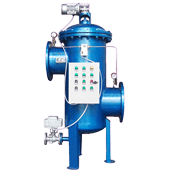
For industrial cooling and circulating water systems, the presence of mechanical impurities such as sand, scale, and organic debris can lead to catastrophic equipment failure. Automatic self-cleaning filters provide a robust defense against these contaminants by offering continuous filtration without the need for manual intervention. The working principle is based on a sophisticated backwash mechanism: as water passes through a high-grade stainless steel screen, impurities are intercepted on the inner wall. As the "filter cake" builds up, the pressure differential between the inlet and outlet increases. Once a set limit is reached, the system’s controller triggers a self-cleaning cycle that uses the system's own pressure to purge the collected waste through a specialized sewage valve.

During the backwash phase, an internal steering valve and an electric sewage valve work in tandem to redirect a portion of the flow. A high-velocity reverse flow is forced through the screen from the outside-in, effectively stripping the trapped debris off the mesh and flushing it out of the system. The most significant advantage of this technology is that the filtration process does not stop during the cleaning cycle. This "zero-downtime" capability is essential for central air conditioning systems, steel mills, and power plants where any interruption in cooling water can cause overheating. The automated nature of the system removes the risk of human error, ensuring that the filter is always cleaned at the optimal moment to maintain peak hydraulic efficiency.

The structural flexibility of automatic self-cleaning filters allows them to be integrated into a wide variety of industrial environments. These units are built from heavy-duty materials like high-carbon steel or stainless steel to withstand high-pressure environments, typically up to 10 bar or more. To accommodate tight mechanical rooms, the drive motors can often be configured in either a vertical or horizontal orientation. By removing viscous substances and mechanical impurities automatically, these filters protect expensive secondary equipment, such as heat exchangers and fine spray nozzles, from erosion and clogging. Investing in an automated solution not only reduces manual labor but also extends the life of the entire water circulation loop, making it a cornerstone of modern industrial water management.
Please fill in your procurement needs and contact information