Mechanical Industry Project
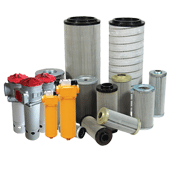
Hydraulic System's "Loyal Guardian" – Filter
Are You Using It Correctly?
Foreword
In the mechanical world, the hydraulic system is like the "heart" of machinery, providing powerful power for equipment
operation. In this crucial hydraulic system, the filter plays an indispensable "protective barrier" role – its performance
directly affects the stability of the hydraulic system and the service life of the equipment.
Today, let's take an in-depth look at filters in hydraulic systems and learn how to select and use them correctly.
Suction Filter
The "First Line of Defense" for Hydraulic Systems
The suction filter (commonly called "suction strainer") is installed on the suction pipe of the pump, acting like a loyal
"doorman" to intercept contaminants and ensure stable oil suction by the pump. It must have low resistance, large
dirt-holding capacity, and long clogging life. It is usually made of woven mesh or metal wire winding materials, with
a large filter area and mesh size to prevent premature wear of the pump.
Construction Machinery Field:In equipment like excavators and cranes, suction strainers effectively protect the
pump from construction site dust and metal shavings, allowing the equipment to work normally in harsh environments.
Precision Hydraulic Systems:Equipment with high oil cleanliness requirements (e.g., machine tools, injection
molding machines) needs suction strainers with low-resistance filter materials (e.g., notched metal wires) to
nsure stable precision processing and injection molding.
High-Temperature/Corrosive Environments:Metallurgical and chemical equipment operate in harsh environments.
Suction strainers use stainless steel housings and corrosion-resistant filter elements to maintain performance in
high-temperature, highly corrosive conditions and protect the hydraulic system.
High-Pressure Filter
A "Solid Fortress" Against High-Pressure Challenges
High-pressure filters for pressure pipelines are more complex than suction strainers, consisting of a filter head,
filter cylinder, and filter element (sometimes with a bypass valve or signal transmitter). They operate under high
pressure, withstand pump pulsation impacts and high-pressure fluctuations, and require high material strength.
Construction Machinery:Hydraulic systems of excavators and cranes face frequent vibration and high-pressure
impacts. High-pressure filters with stainless steel sintered mesh or composite filter elements can effectively handle
these challenges and ensure stable equipment operation.
Industrial Hydraulics:Hydraulic pipelines of machine tools and injection molding machines require high filtration
precision (≤5μm). High-pressure filters provide precise filtration to meet the needs of precision valve groups,
improving equipment processing accuracy.
Energy and Chemical Industry:Media in oil pipelines and chemical equipment are often corrosive. High-pressure
filters with 316L stainless steel housings resist corrosion in sulfur-containing or acidic media, ensuring production safety.
Power Equipment:High-pressure filters in turbine lubrication systems integrate differential pressure monitoring for
predictive maintenance, enabling early detection of potential issues and reducing equipment failures.
Return Oil Filter
The "Cleanliness Guardian" of the Oil Tank
The return oil filter (commonly called "return strainer") is typically installed in the lower half of the oil tank in modern
hydraulic system designs. It mainly prevents impurity particles (generated by the system or entering from outside)
from returning to the tank, avoiding re-entry into the pump and subsequent wear.
Construction Machinery:In the return oil lines of excavators and cranes, return strainers filter out metal wear
particles from hydraulic cylinders and valve groups, significantly extending the hydraulic pump's service life.
Metallurgical and Mining Equipment:Equipment like rolling mills and crushers operate in high-temperature,
dusty environments. Return strainers with stainless steel housings and impact-resistant filter elements ensure
stable system operation in harsh conditions.
Industrial Production Lines:High-precision return oil filtration (≤5μm) in injection molding machines and machine
tools effectively protects precision components (e.g., proportional valves, servo valves), ensuring high production
precision and stability.
Filter Selection Misconceptions
Have You Fallen for These?
Statistics show that about 70% of hydraulic system failures stem from contaminated oil. Therefore, correct filter
selection is critical – but many users have misconceptions in practice.
Misconception 1: High-Precision Suction Filters Are UniversalMany believe high-precision suction filters
both protect the pump and ensure system cleanliness. In reality, high-precision suction filters easily clog with
excessive contaminants, causing poor pump suction (or even cavitation), accelerating pump wear, and
threatening system safety.
Misconception 2: Rated Flow = Actual FlowIf selected at a 1:1 rated-to-actual flow ratio, filter resistance quickly
triggers the clogging signal, requiring frequent cleaning/replacement (increasing costs). Generally, the rated flow
of suction/return filters should be ≥3x the system's actual flow; pipeline filters should be ≥2.5x. Consult the manufacturer
for special oil types.
Misconception 3: Filtration Precision = Absolute FiltrationSome think an (Xμm) filter element removes all
particles larger than Xμm – this is incorrect. Filtration precision is determined by the filtration ratio (βx); the same
precision can have large efficiency differences due to varying βx values.
Misconception 4: Higher Precision Is Always BetterWhile high-precision filters improve contamination control,
they increase system costs and shorten filter life – they are not always the best choice.
Filter Maintenance Misconceptions
Stop Making These Mistakes!
In addition to selection, daily filter maintenance is critical – but many users have misconceptions here.
Misconception 1: Bypass Valves Are "Maintenance-Free" SwitchesFilters with bypass valves should not operate
with clogged elements for long periods. A clogged element opens the bypass valve, reintroducing filtered contaminants
into the system (causing high local contamination and severe hydraulic component damage). Clean or replace the
element immediately when the clogging signal activates.
Misconception 2: Service Life Is the Only Performance MetricService life alone does not reflect filter performance.
Key indicators include filtration ratio, dirt-holding capacity, and initial pressure loss. Longer service life is only beneficial
if it meets system cleanliness requirements under the same operating conditions.
Correct filter selection and use are reliable guarantees for safe hydraulic system operation. As intelligent and eco-friendly
technologies advance, filters play an increasingly important role in the mechanical industry – shifting from passive protection
to active optimization, and becoming a key link in improving overall equipment efficiency. We hope this sharing helps you
better understand hydraulic system filters, avoid pitfalls in practice, and achieve more stable, efficient equipment operation!