In the complex process of chemical production, solid-liquid separation is a key link to ensure the smooth
progress of production, and its effectiveness is closely related to the stable operation of production and
the quality control of products. With the continuous development of chemical processes and the deepening
of environmental protection concepts, a device called candle filter is gradually gaining attention in the
industry due to its unique design concept.
Dual filtering mechanism
How to achieve solid-liquid separation?
The filtration process of candle filters originates from the synergistic effect of surface filtration and deep
filtration, forming a separation system. When the chemical material to be filtered enters the sealed
filtering chamber, under the pressure difference naturally formed by the system, the liquid medium
will permeate through the porous structure of the filter element, while the solid particles are effectively
intercepted on the surface of the filter element.

As the filtration time progresses, a uniform layer of filter cake will gradually form on the surface of the
filter element. This layer of filter cake is not an obstacle to filtration, but rather a "secondary filtration
medium" that further captures small particles through its pore structure, allowing the filtration accuracy
to dynamically improve over time. When the thickness of the filter cake reaches the preset value, the
system can use a backwash program (by introducing compressed air or clean liquid) to make the filter
cake fall off and restore the performance of the filter element, completing a periodic filtration cycle.
This automatic regeneration mechanism enables the equipment to support continuous production
and helps reduce the need for frequent downtime for cleaning.
Modular structure
Collaborative cooperation of components
The structural design of candle filters revolves around two core directions of "effective filtration+convenient
maintenance", mainly composed of the following key components:
Filter chamber: Made of pressure resistant and corrosion-resistant metal or composite materials, it serves
as a closed space for material processing and can withstand working pressures of 0.6-1.6MPa, suitable for
pressure requirements in different chemical scenarios.
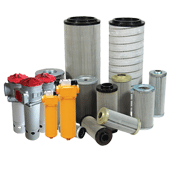
Candle filter: As the core functional component of the equipment, it is a vertically arranged cylindrical
structure (usually 50-150mm in diameter and 500-2000mm in length), named after its appearance resembling
a candle. The material of the filter element can be selected according to the working conditions, including
various types such as 316L stainless steel sintered mesh (temperature resistance above 200 ℃), polypropylene
fiber (acid and alkali resistance), ceramic coating (suitable for high-precision filtration), etc., which can be
used for different material characteristics.
Liquid distribution/collection system: The material is evenly distributed through a specially designed flow
guiding structure, aiming to allow each filter element to fully participate in filtration and reduce the risk of
efficiency decline caused by local overload.
Self control components: including pressure sensors, pneumatic valves, and PLC control systems, which
can monitor real-time parameters such as filtration pressure difference and flow rate, and automatically
switch between filtration, backwashing, slag discharge and other processes.

This modular structural design allows the equipment to have good scalability, and the processing capacity
can be flexibly adjusted by increasing or decreasing the number of filter elements. The processing capacity
of a single device can usually be expanded from 0.5m ³/h to over 100m ³/h.
Multi dimensional performance characteristics
Comprehensive performance from filtration to environmental protection
Performance of filtering accuracy
Candle filters are suitable for separating solid particles in the particle size range of 0.5-100 μ m. By selecting
filter cartridges with different pore sizes, precision grading control can be achieved. In some specific
chemical production, filter cartridges with different materials and pore sizes help adapt to material
characteristics and support the uniformity of filtered materials.
Energy consumption characteristics during operation
Unlike traditional centrifugal filtration equipment, candle filters do not have high-speed rotating components
and mainly rely on system pressure difference to drive filtration. They have certain characteristics in terms of
energy consumption and are suitable for the operational needs of continuous production.
Convenience of maintenance
The modular filter design makes the maintenance process easier, with a single filter element that can be
replaced independently without disassembling the entire machine, which helps reduce the impact of
maintenance on production. At the same time, the equipment is equipped with an automatic backwash
function, which can complete filter regeneration without stopping the machine, helping to ensure the
continuity of production.
The manifestation of environmental performance
By adopting a dry slag discharge design, the moisture content of the filter cake can usually be controlled
below 60%, which helps reduce the amount of wastewater generated. In some special material processing,
filter cartridges made of specific materials can help reduce suspended solids concentration, which is in line
with the chemical industry's pursuit of green production and responds to the direction of environmental
upgrading.

From the scientific design of principles and structures to multi-dimensional performance, candle filters
provide a reliable and environmentally friendly technical solution for solid-liquid separation in chemical
production. Its comprehensive performance in supporting production continuity, improving filtration
stability, and responding to environmental requirements makes it one of the equipment worth considering
in modern chemical production.