Today, as food security is highly valued, China's agricultural production is facing multiple challenges in
terms of resources and environment. Natural disasters occur frequently and water resources are scarce,
especially with the average water resources per mu of arable land accounting for half of the world average.
The water utilization rate of traditional irrigation methods is less than 50%, and "water shortage" and
"low efficiency" have become the main factors restricting sustainable agricultural development. In the
construction process of high standard farmland, high water quality impurities, blocked irrigation systems,
and uneven water and fertilizer utilization are common difficulties on project sites. If sediment and
suspended solids in water are not effectively treated and directly enter precision drip irrigation or
sprinkler irrigation systems, it is easy to cause clogging of drip heads and nozzles, resulting in uneven
irrigation, wasting valuable water resources, directly affecting crop absorption of water and fertilizer,
and ultimately affecting yield.
How to deal with this situation?
The key is to establish a reliable irrigation filtration system
We will conduct an in-depth analysis of two technological equipment that play an important role in
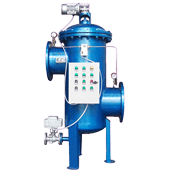
the project - automatic backwash sand and gravel filters and automatic backwash laminated filters,
and explain how they work together to help high standard farmland achieve the goal of "water-saving
and yield increasing".

Analysis of Working Principle

Key steps in pre-processing
Automatic backwash sand and gravel filter
Working principle: The sand and gravel filter mainly uses media such as quartz sand or anthracite with
specific particle sizes as the filtering layer. When irrigation water passes through the tank, larger particles
and impurities in the water, such as sediment, algae, suspended solids, etc., are effectively trapped
between the pores of the filter layer, thereby achieving preliminary purification of the water. As the
front-end processing unit of the irrigation system, it undertakes the main task of coarse filtration.
Main features: Large processing capacity, strong pollution resistance, suitable for treating water sources
with high sediment content. The automatic backwash function is an important feature. When the impurities
trapped in the filter layer increase, causing the pressure difference between the inlet and outlet to increase
to the set value, or reaching the preset cleaning time, the system will automatically start the backwash
process. By switching the valve, the water flow is reversed at high speed through the filter layer, and the
intercepted pollutants are washed up and discharged through the sewage outlet, without the need for
manual disassembly and cleaning, saving time and manpower.

The key guarantee for fine filtration
Automatic backwash laminated filter
Working principle: The core of a laminated filter is a set of tightly pressed precision prismatic laminations.
Each stack has specially designed grooves and edges on both sides. When the water flows through this
group of stacked sheets, impurities are effectively trapped in the cavity formed by the intersection of the
stacked sheets. Its filtering accuracy can usually reach 100-200 microns (or even higher), effectively
intercepting small particles that cannot be removed by sand and gravel filters.
Main features: High filtration accuracy and relatively compact size. It also has automatic backwashing
capability. When the pressure difference or timer triggers the cleaning command, the filtering unit will
automatically isolate, and the stack group will be "released" under water pressure or mechanical drive.
At the same time, the reverse water flow will wash the surface of the stack, thoroughly washing away
the trapped impurities. This process also does not require manual intervention, ensuring the continuous
and efficient operation of the fine filtration process.
Project Practice
Constructing an irrigation guarantee system with a dual filtration system
In actual high standard farmland projects, we usually recommend a combination of "sand and gravel
filter+laminated filter" to form a complementary dual filtration barrier.
The first treatment (sand and gravel filter): set at the forefront of the system to deal with raw water
from rivers, reservoirs, ponds, etc. that may contain a large amount of sediment and suspended solids,
protecting subsequent laminated filters and the entire irrigation system from rapid blockage and wear
caused by large particle impurities.
Second processing (laminated filter): Following the sand and gravel filter, it serves as a fine filtration
unit responsible for capturing small particles that have not been filtered by the previous stage, ensuring
clear water quality entering the drip irrigation belt or nozzle, and fundamentally reducing the risk of
droplet clogging.

Case scenario
In a high standard farmland project, we selected:
One Φ 1200 × 4 automatic backwash sand and gravel filter (flow rate 280m ³/h, DN200 inlet and outlet)
is used as a pre-treatment. One 4-inch H-type 5-group automatic backwash laminated filter (flow rate
280-320m ³/h, 8-inch inlet and outlet) is used for precision treatment.
This combination ensures that under high flow irrigation conditions, the water quality can still meet the
requirements of precision irrigation, the system operates stably, the degree of backwashing automation
is high, and the management intensity is significantly reduced.
Technology Application and Benefit Analysis
01 Improve water efficiency
Double filtration effectively prevents blockages in pipelines and irrigators, combined with water-saving
irrigation technology, increasing the utilization rate of irrigation water from less than 50% traditionally
to over 80%, and reducing the amount of irrigation water per acre.
02 Ensure crop growth
Clean irrigation water combined with an integrated water and fertilizer system can achieve precise
nutrient delivery, avoid impurities affecting crop root development, improve water and fertilizer absorption
efficiency, and lay the foundation for high and stable crop yields.
03 Reduce operating costs
The fully automatic backwash design eliminates the need for frequent manual disassembly and cleaning,
reducing the manpower and maintenance costs of farmland management, and is suitable for large-scale
and intensive planting modes.
The automatic backwash sand and gravel filter and laminated filter are not simply equipment stacking,
but a systematic solution for agricultural irrigation water quality problems that has been tested in practice.
They have become important equipment in modern high standard farmland construction due to their
high efficiency, stability, and intelligence.
From a single device to system integration, technological advancements are constantly driving the
transformation of traditional agriculture. In the future, with the deep integration of intelligent control
technologies such as the Internet of Things and big data, filtering systems will achieve intelligent,
precise, and efficient operations, providing technical support for ensuring national food security
and promoting green and sustainable agricultural development.