

Push Flow Aerator for Municipal Wastewater Oxygen Enhancement
Introduction:Push flow aerator is a lightweight, durable and cost-effective aeration device widely used in urban sewage treatment and polluted water remediation. It integrates oxygen supply and horizontal pushing flow, raising dissolved oxygen rapidly and circulating water body to reduce organic pollutants and ammonia nitrogen. Many wastewater treatment project contractors are looking for stable, space-unlimited aeration equipment alternatives for aerobic tanks and landscape water restoration. This article covers product introduction, working principle, technical specifications, core advantages and application scenarios, helping engineers and buyers select suitable aeration solutions.
We're here to help:
Easy ways to get the answers you need.
Product parameter:
Product Introduction
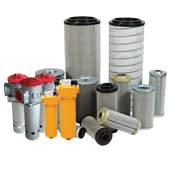
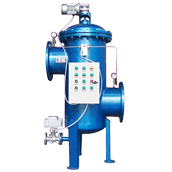
The push flow aerator is a versatile aeration unit combining high efficiency and economic benefits. It can cooperate with upstream water filter housing and self-cleaning filter for pretreatment, intercepting large impurities and fibrous debris to avoid impeller winding and equipment failure. This aerator is lightweight and durable, and its aeration and oxygenation technology has been maturely applied in municipal sewage treatment. It helps build a healthy aquatic ecosystem: on one hand, it continuously supplies oxygen to the water body; on the other hand, its powerful thrust creates flowing water circulation, achieving both biochemical treatment and ornamental wave effect. It is not restricted by site space conditions, and can quickly lift dissolved oxygen (DO) in water, effectively removing organic matter and ammonia nitrogen contaminants. It is a practical and popular aeration equipment for sewage biochemical treatment and black and odorous water restoration projects.
Working Principle

The push flow aerator realizes dual functions of oxygen supply and water pushing at the same time. The blower delivers compressed air into the water through the pipeline, and the rotating impeller cuts the air stream into tiny bubbles to increase the contact area between air and water for oxygen dissolution. Meanwhile, the rotating impeller generates strong horizontal pushing force, driving the aerated water to flow far away, forming a continuous circulating water flow inside the tank or river. The circulating flow keeps sludge and pollutants fully mixed, prevents sludge deposition, and allows microorganisms to fully degrade organic pollutants and ammonia nitrogen. It can rapidly increase dissolved oxygen within a short time. The equipment structure is compact and flexible, and it can operate normally in different open water tanks and river channels without strict space limits.
Core Advantages
1. Dual function of aeration and pushing flow:
Oxygenation and water circulation are completed at the same time, preventing sludge sedimentation.
2. Wide application range:
Not limited by space conditions, adaptable to biochemical tanks, rivers and landscape water bodies.
3. Lightweight and durable:
Simple and reliable structure, easy transportation and installation, long service life.
4. Fast oxygen increasing speed:
Quickly raise DO value and accelerate the degradation of organic pollutants and ammonia nitrogen.
5. Good ornamental effect:
Stable pushing wave effect, suitable for landscape river and park water treatment.
6. High economic efficiency:
Low comprehensive investment and stable operation cost.
Technical Specifications
| Item | LF-7.5 | LF-11 | LF-22 | LF-37 |
|---|---|---|---|---|
| Main Power (Kw) | 7.5 | 11 | 22 | 37 |
| Blower Power (Kw) | 3 | 4 | 5.5 | 7.6 |
| Impeller Diameter (mm) | 380 | 440 | 470 | 580 |
| Working Water Depth (m) | 3-20 | 3-20 | 3-20 | 4-20 |
| Air Intake (m³/h) | 330 | 420 | 546 | 702 |
| Push Flow Distance (m) | 10-21 | 18-35 | 30-55 | 40-70 |
Application Scenarios
Municipal sewage treatment aerobic biochemical tank
Black and odorous river, lake and landscape water restoration
Industrial wastewater aerobic treatment pool
Rural decentralized sewage treatment project
Water body ecological restoration and aquaculture oxygen enhancement
Combined with self-cleaning filter and water filter housing to form a complete wastewater pretreatment and aeration system

FAQ
Q1: What are the differences between push flow aerator and submersible mixing aerator?
A: Push flow aerator focuses on long-distance horizontal pushing and circulation, suitable for long channels and rivers; the submersible aerator mainly forms local turbulent mixing in deep tanks.
Q2: What is the maximum pushing distance of this equipment?
A: The LF-37 model can reach a pushing distance of 40–70 meters, which is suitable for long and narrow water channels.
Q3: Can it be used for landscape river treatment?
A: Yes. It can not only purify the water, but also create a beautiful wave effect, which is widely used in landscape water projects.
Q4: Is pre-filtration necessary for this aerator?
A: It is recommended. Matching self-cleaning filter and water filter housing can block hair, fiber and large debris to protect the impeller from winding.
Q5: What is the suitable working depth?
A: Most models adapt to 3–20m water depth, LF-37 supports 4–20m working depth.
Related Products
XF Series auto self cleaning strainer
S304 S316 stainless steel fully Automatic Backwash Water
316L Stainless Steel Brush Self-Cleaning Filter for Corrosive Water
Heavy Duty Brush Type Self-Cleaning Strainer | Customizable Size & Material
Brush Type Self-Cleaning Filter | Automatic Backwash Filter for Industrial Water Treatment
Please fill in your procurement needs and contact information