

Self-Cleaning Filters for Industrial Water Circulation
Introduction: Inmodernindustrialproduction,thestabilityofcoolingwatercirculationsystemsdirectlydictatestheoveralle
We're here to help:
Easy ways to get the answers you need.
Product parameter:
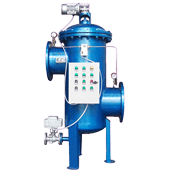
In modern industrial production, the stability of cooling water circulation systems directly dictates the overall efficiency of the facility. Automatic self-cleaning filters have emerged as high-efficiency, online solutions designed to intercept mechanical impurities, sand, and biological sludge without manual intervention. Traditional filtration systems often require downtime for manual cleaning, which not only increases labor costs but also risks production halts. In contrast, self-cleaning technology utilizes advanced differential pressure sensing to trigger cleaning cycles while the system remains fully operational. This ensures a continuous supply of clean water, making it the preferred choice for the steel, power, and chemical industries.

The internal architecture of these filters typically features high-strength stainless steel wedge wire or perforated screens, engineered to withstand high working pressures and massive flow rates. As water passes through the screen, contaminants are trapped on the inner surface. Over time, the accumulation of debris creates a pressure differential between the inlet and outlet. Once the pre-set threshold is reached, the control system automatically activates the cleaning mechanism—such as a rotating scanner or a brush assembly—to strip away the debris and flush it out through a sewage valve. The entire process takes only a few seconds and has a negligible impact on the system’s total flow, achieving true unattended operation.

Beyond automation, a primary advantage of self-cleaning filters is their exceptional water efficiency. Compared to traditional sand filters, the backwash water consumption is remarkably low, often representing less than 1% of the total flow. This is a critical economic factor for facilities operating in water-scarce regions or those under strict discharge regulations. Furthermore, the compact design allows for easy integration into existing pipework with a minimal footprint. By providing a constant barrier against debris, these filters protect expensive downstream heat exchangers and spray nozzles, significantly extending the service life of the entire hydraulic loop.
Please fill in your procurement needs and contact information