

Self-Cleaning Filters for Industrial Cooling Systems
Introduction: Industrialcoolingsystemsarethelifebloodofpowerplants,steelmills,andmanufacturingfacilities,buttheyar
We're here to help:
Easy ways to get the answers you need.
Product parameter:
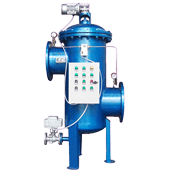
Industrial cooling systems are the lifeblood of power plants, steel mills, and manufacturing facilities, but they are constantly at risk from waterborne debris. Cooling water is often drawn from rivers, lakes, or recycled sources that contain high levels of sand, scale, and organic matter. If these impurities are not removed, they can clog heat exchangers, erode pump impellers, and reduce the efficiency of cooling towers. Automatic self-cleaning filters provide a high-capacity, maintenance-free solution to this problem, ensuring that the cooling loop remains clear and functional 24 hours a day without human intervention.

The heart of the self-cleaning filter is its ability to perform a backwash cycle without stopping the main flow. As water passes through a heavy-duty stainless steel screen, particles are trapped on the internal surface. When the accumulation of debris causes the pressure to drop, the filter’s sensors trigger a motorized cleaning arm. This arm sweeps the surface of the screen while a flush valve opens, creating a high-velocity suction that pulls the contaminants off the screen and out of the system. Because only a small portion of the screen is cleaned at any one time, the vast majority of the water continues to flow to the industrial process, preventing costly downtime.

These filters are particularly effective at handling "heavy" mechanical impurities that would quickly overwhelm standard cartridge or bag filters. For example, in a steel mill where cooling water is used to quench hot metal, the water can become heavily laden with mill scale. A self-cleaning filter can handle these high solids loads continuously, whereas a cartridge filter would need to be replaced every few hours. By automating the filtration and sewage discharge process, facilities can reallocate their maintenance staff to more critical tasks. The result is a more reliable cooling system, lower energy bills due to cleaner heat exchange surfaces, and a significantly longer lifespan for all downstream hydraulic components.
Please fill in your procurement needs and contact information