When a discarded lithium battery enters the recycling production line, have you ever thought about how
the dust and harmful gases that may pollute the air are "subdued" one by one? In this green action of
turning waste into treasure, dust removal and exhaust gas treatment systems are like invisible guardians,
weaving a tight protective net with technology to safeguard the blue sky and the health of workers.
The 'dust catcher' in the crushing workshop
Lock micron level pollution at the source
In the critical process of dismantling and crushing lithium batteries, metal shavings, graphite dust, electrolyte
residues, and other small "invisible killers" can also pollute the environment and pose safety hazards once
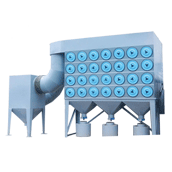
they dissipate. At this point, the bag filter is like a precision "air screen" that uses anti-static filter bags as
"catchers" to firmly adsorb micron sized black powder (lithium cobalt manganese nickel oxide) and copper
aluminum dust through pulse blowing, with a capture efficiency of over 99.9%. What's even more clever is
that these recycled high-value dust are not directly discarded, but are sent back to the back-end process
through closed pipelines, becoming a "raw material reserve" for recycled materials. It's like building an
"invisible net" in the production line, guarding the environmental defense line, and providing an additional
guarantee for resource recycling,

The 'purification journey' of high-temperature flue gas
From toxic gases to clean emissions
When lithium batteries enter the pyrolysis/calcination section, harmful gases such as hydrogen fluoride
(HF), benzene derivatives, dioxins, etc. generated at high temperatures can be considered the most
difficult "hard bones" to deal with. At this moment, a coordinated "purification legion" began to take
action:
The first step of cooling interception: The cooling tower uses instant cooling to prevent the generation
of substances such as dioxins; The bag filter first captures most of the dust.
Step 2 acid-base neutralization: The alkali spray tower acts as a "chemical guardian", using sodium
hydroxide solution to neutralize acidic gases such as HF, with a removal efficiency of over 95%.
The third step is deep purification: the activated carbon adsorption tower absorbs residual organic
pollutants like a sponge, while the thermal storage incinerator (RT0) uses high temperatures above
760 ° C to completely decompose VOCs into carbon dioxide and water, with a heat recovery
efficiency of over 95%.
Under this combination of punches, the originally complex harmful smoke is stripped layer by layer,
and the final emission concentration is much lower than the national environmental protection
standards, even reaching the strict requirement of "zero emissions in response to complaints"
From 'Pollution Threat' to 'Intelligent Protection'
The evolutionary code of environmental protection equipment
In the scenario of lithium battery recycling, environmental protection equipment is no longer just a
simple "filter", but has incorporated more intelligent design:
Explosion proof safety system: designed with anti-static filter material, explosion-proof sheet,
inert gas protection, etc., to prevent flammable and explosive lithium metal dust from causing chaos;
Intelligent monitoring network: IoT technology monitors real-time parameters such as filter bag
lifespan and emission concentration. Once abnormalities are detected, immediate warnings are
issued to ensure more accurate maintenance;
Resource recycling loop: The recovered black powder directly enters the regeneration process,
and the waste liquid treated with acid mist can be reused after neutralization, truly achieving "zero waste".
When environmental protection becomes' productivity '
The dual value of green recycling
On the monitoring screen of a lithium battery recycling factory, a set of data is particularly prominent:
the dust emission concentration remains stable at 8mg/m3 (national standard 30mg/m3), and the metal
recovery rate has increased to 99.3%. This means that for every ton of waste batteries processed, several
kilograms of harmful gas emissions are reduced, and nearly a hundred kilograms of rare metals such as
lithium and cobalt can be recovered. From an environmental perspective, these devices safeguard the
respiratory health of workshop workers and protect surrounding residents from pollution; From an industrial
perspective, an efficient environmental protection system is precisely the key to the scalability of recycling
processes - only by controlling pollution can the "green cycle" of lithium batteries truly be implemented,
clearing obstacles for the sustainable development of the new energy industry.
Every purification is a 'green reply' to the earth
When the last ray of clean air overflows from the discharge outlet, and when the recovered lithium
element becomes part of the new battery again, these dust removal and exhaust gas treatment systems
are interpreting the essence of environmental protection in a technological way: not as a remedy
afterwards, but as a green closed loop built from the source. On the road of "turning waste into treasure"
in the recycling of waste lithium batteries, they are not only equipment, but also green engines driving the
circular economy.